
 Furnace & heating
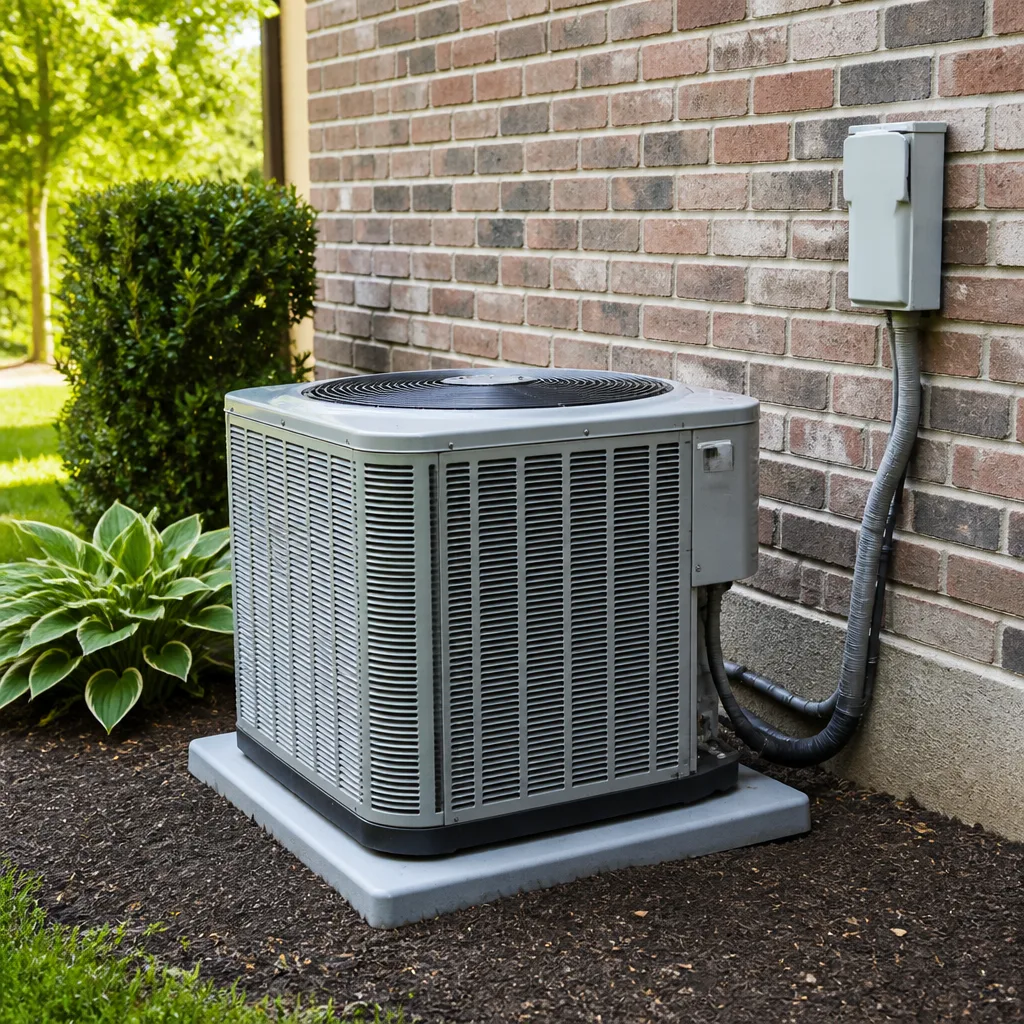 AC repair
 Heat pumps
 Ductless mini splits
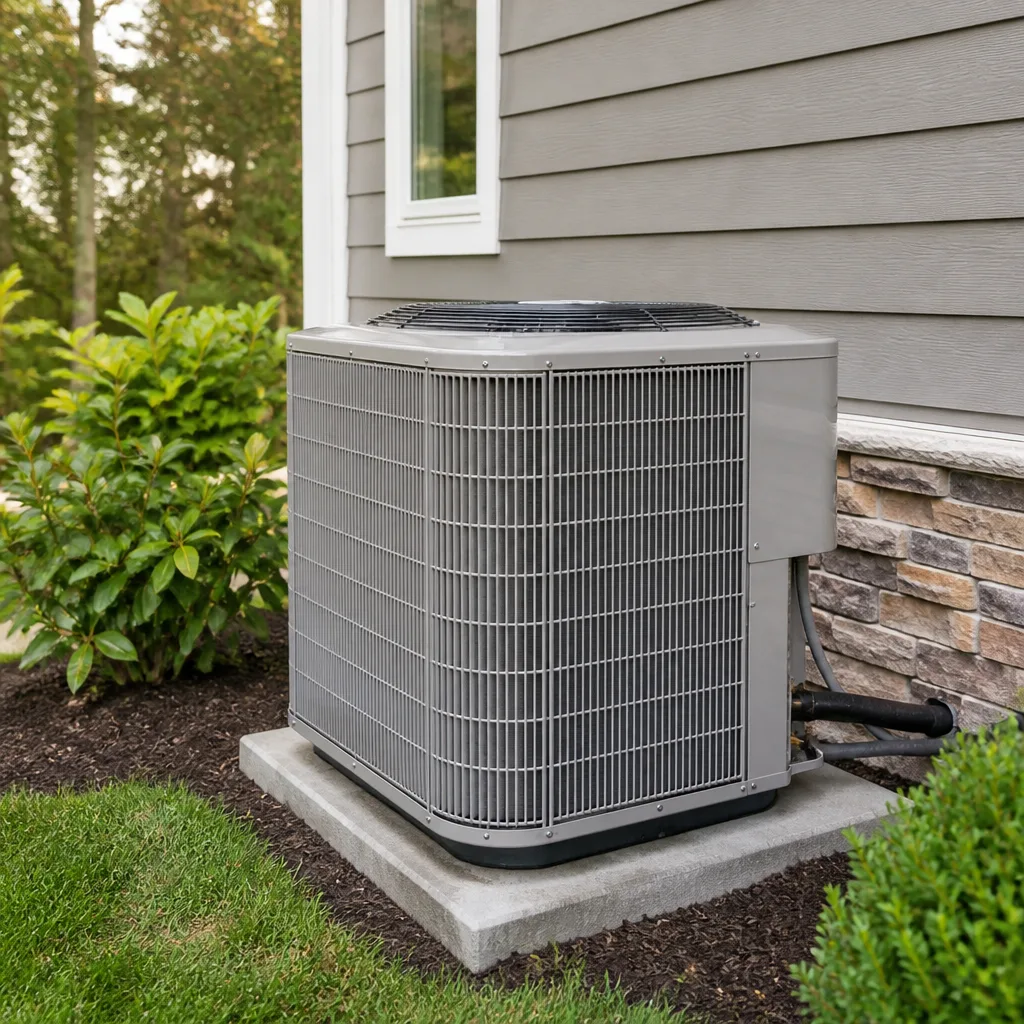 Carrier
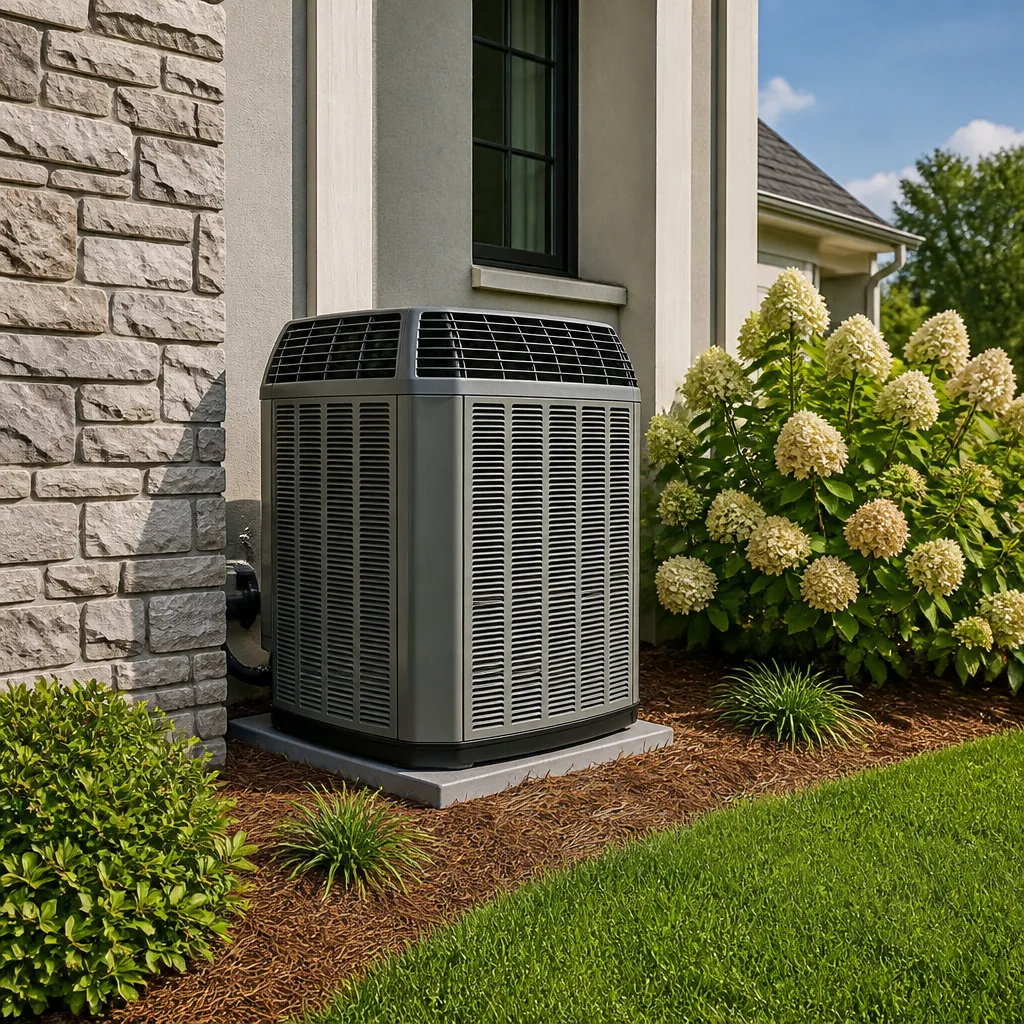 Trane
Trane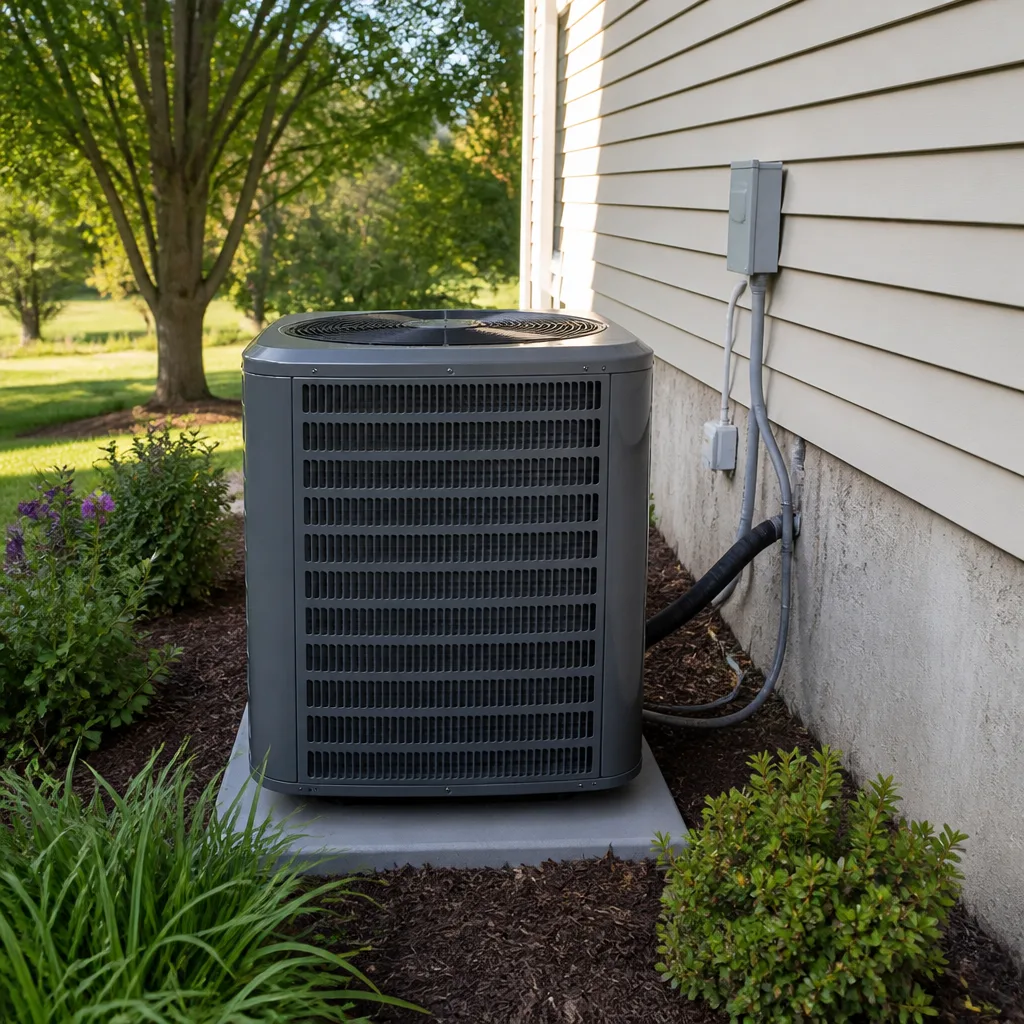 Goodman
Seasonal tune-up and full diagnostic on your Carrier, Trane, or Goodman system - readings shown to you before any repair is proposed
Diagnosis first, numbers second - you approve the repair price before a single part goes in.
Get your free estimateCarrier Capacitor Replacement: The Los Angeles Owner’s Guide
A Carrier capacitor replacement in Los Angeles typically runs $175 – $375 installed, parts and labor included, and our trucks carry the most common Carrier-compatible dual-run and start capacitors so we can usually complete the job same day. The capacitor is the small cylinder inside your condenser or air handler that gives the compressor and fan motors the electrical jolt they need to start and keep running. When it fails, your Carrier system either won’t start at all, hums and clicks without the fan spinning, or shuts off a few minutes after kicking on. Most homeowners discover the failure on the first hot day of the season, when the thermostat calls for cooling and nothing outside happens except a low hum.
We see this part fail more in Los Angeles than almost anywhere else in the country, and the reason is straightforward: capacitors don’t love heat, and our condenser units sit in direct sun on the hottest afternoons of the year. In neighborhoods like Woodland Hills, Sherman Oaks, and the east side flats near Boyle Heights, a capacitor that would last eight years in milder weather commonly gives up after four or five. The good news is that this is one of the most straightforward repairs a trained tech can do, and when we match the right part to your Carrier’s exact model and spec, you’re back to cold air the same afternoon. Victor Mancini, our owner, will tell you he’d rather replace a hundred capacitors than tell a homeowner they need a whole new system when a $30 part was the actual problem.
Which Carrier Models This Applies To
This replacement applies to essentially every residential Carrier air conditioner and heat pump built in the last thirty years, across all the major series lines: Comfort, Performance, Infinity, and the older Base and WeatherMaker models. Carrier uses the same capacitor families across dozens of model numbers, so the real question isn’t whether we can match your unit, it’s which capacitor your specific unit calls for.
The most common Carrier setups use a dual-run capacitor, a single cylinder that serves both the compressor and the outdoor fan. These are rated by microfarads (µF) and voltage, and Carrier units most often call for values like 35/5 µF, 40/5 µF, 45/5 µF, or 50/5 µF at 370 or 440 volts. Here’s the compatibility gotcha most homeowners run into: you can’t just grab any capacitor with the right shape. The microfarad rating must match the motor’s design spec within a tight tolerance, and the voltage rating must meet or exceed the original. Installing a capacitor with the wrong microfarad value overheats the motor windings and shortens compressor life. We match the part to the label on your existing capacitor and cross-reference it against Carrier’s spec sheet for your model before we ever make the swap.
On the OEM-vs-aftermarket question: Carrier-branded capacitors are made by suppliers under contract, and a number of quality aftermarket equivalents, like AmRad and Titan HD, are made in the USA and consistently outlast the original part. We stock both OEM Carrier capacitors and the aftermarket heavy-duty versions, and we’ll show you the difference and the price before we touch a thing. We’re an independent service company, not affiliated with Carrier, which means we’re free to install whichever capacitor is genuinely the better choice for your unit and your budget.
How to Identify Your Capacitor Before Calling
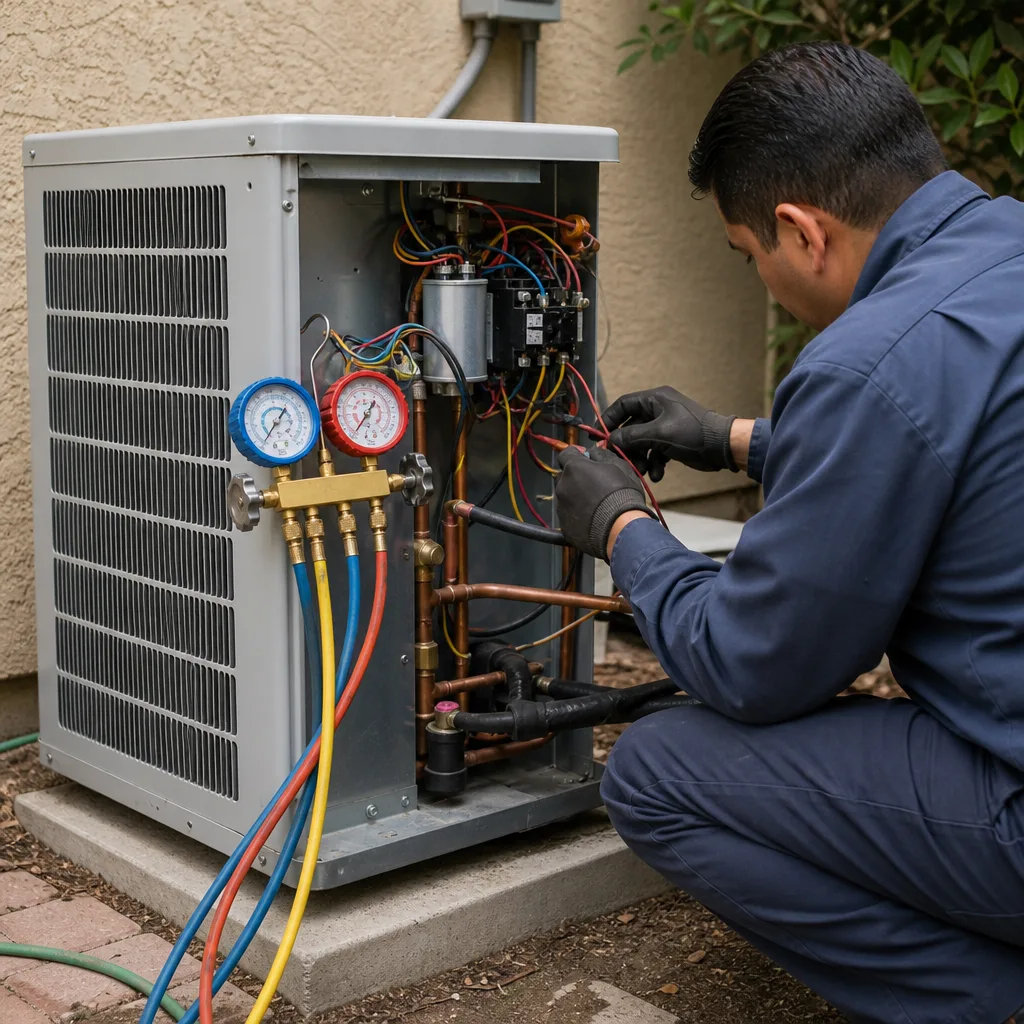
If you’re comfortable opening the electrical panel on your outdoor unit (power off at the breaker, always), you can read the label on the existing capacitor yourself. You’re looking for three numbers: the microfarad rating (often printed as two numbers separated by a slash, like 45/5), the voltage (370 or 440), and the shape (oval or round). Snap a clear photo of the label and have that ready when you call us. If you’re not comfortable opening the panel, don’t. We’ll read it in seconds on arrival.
Styles & brands we work with
Signs Your Carrier Capacitor Replacement Is Failing
Capacitors rarely fail all at once with no warning. In our experience across Los Angeles, homeowners notice one or more of these signs before the system quits entirely:
- The outdoor unit hums but the fan isn’t spinning. You hear a low electrical buzz from the condenser, but the fan blades are still. That’s the compressor or fan motor trying to start without the electrical push it needs. This is the classic dead-capacitor signature, and running the system in this state can damage the motor, so shut it down and call us.
- The air conditioner starts, runs for a minute or two, then shuts off. The capacitor has enough juice to get things moving, but it can’t hold the voltage steady under load. The system trips a safety or thermal overload, resets, and tries again.
- You need to push-start the fan with a stick. Some older Carrier condensers will run if you give the fan blades a manual spin. It’s a clever workaround, but it’s also a clear sign the capacitor is dead, not a permanent fix.
- The outside unit won’t start at all, even though the thermostat clicks on. Nothing hums, nothing moves, nothing happens. A completely failed capacitor can leave the condenser silent while the indoor blower keeps running, blowing room temperature air.
- The top of the capacitor looks swollen, cracked, or leaking. Heat inside the capacitor breaks down the internal dielectric fluid and produces pressure. A bulged or split top is visible damage, and it means failure is underway even if the unit still starts occasionally.
The unfortunate pattern we see in Los Angeles is that the failure almost always happens during a heat wave, because the capacitor spends the hottest stretch of the year working at its thermal limit. When the part dies on a 105-degree day in the Valley, the fix can’t wait a week. It’s the exact scenario where our same-day service and live-person phone coverage matter most.
See the difference
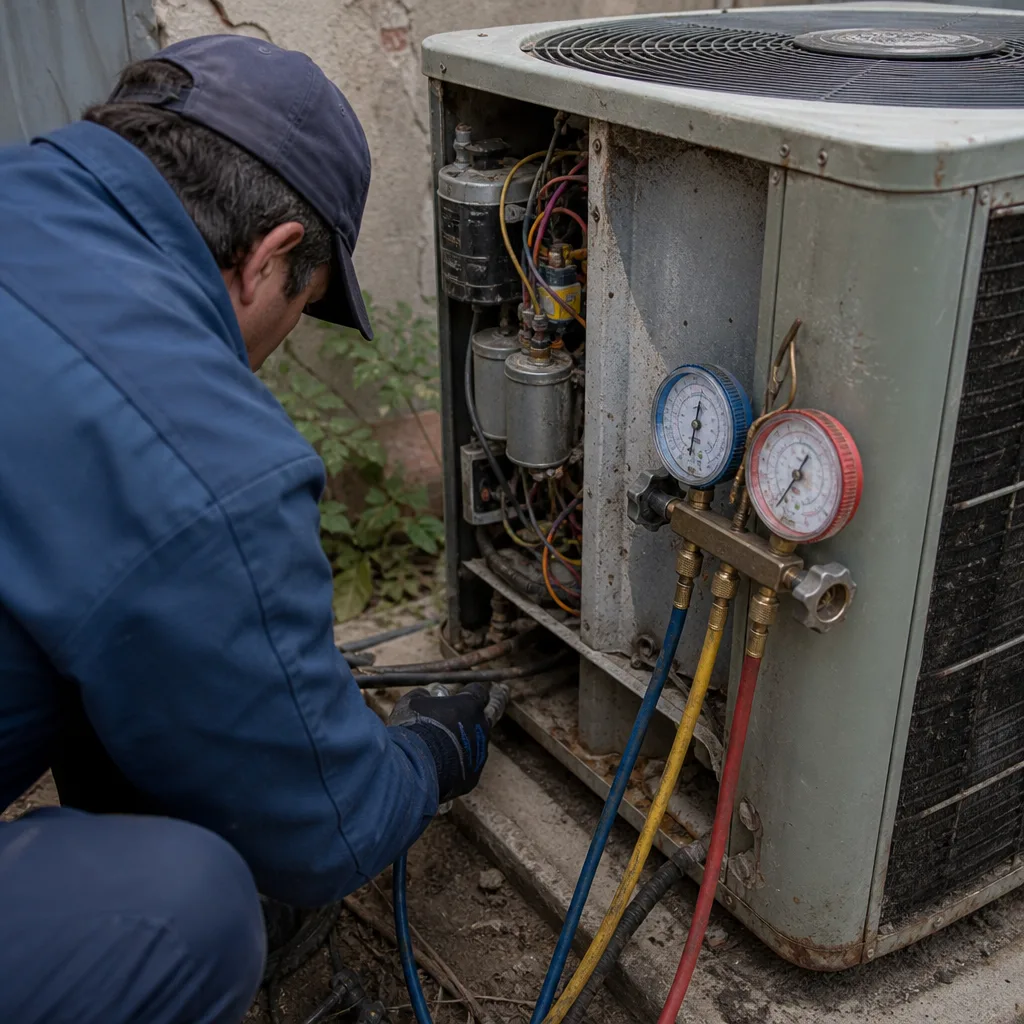 Before
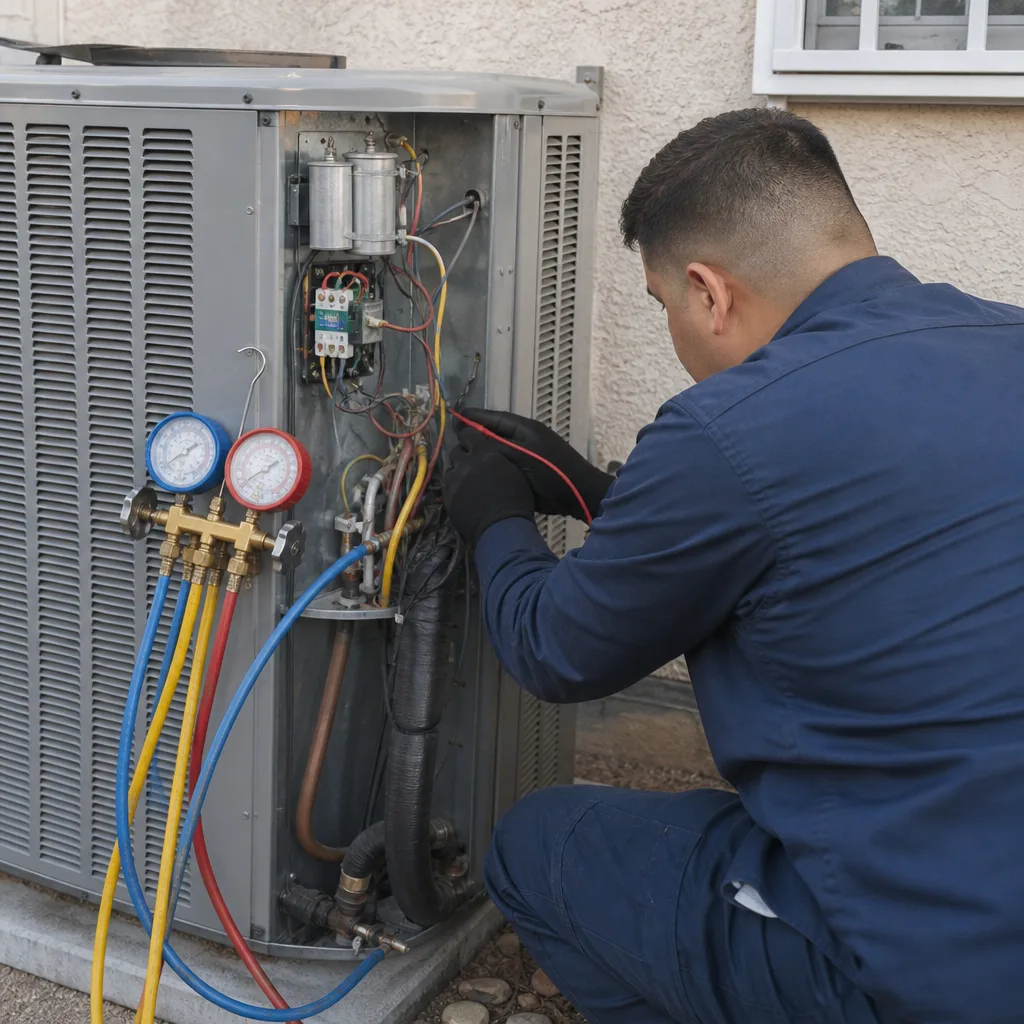 After
After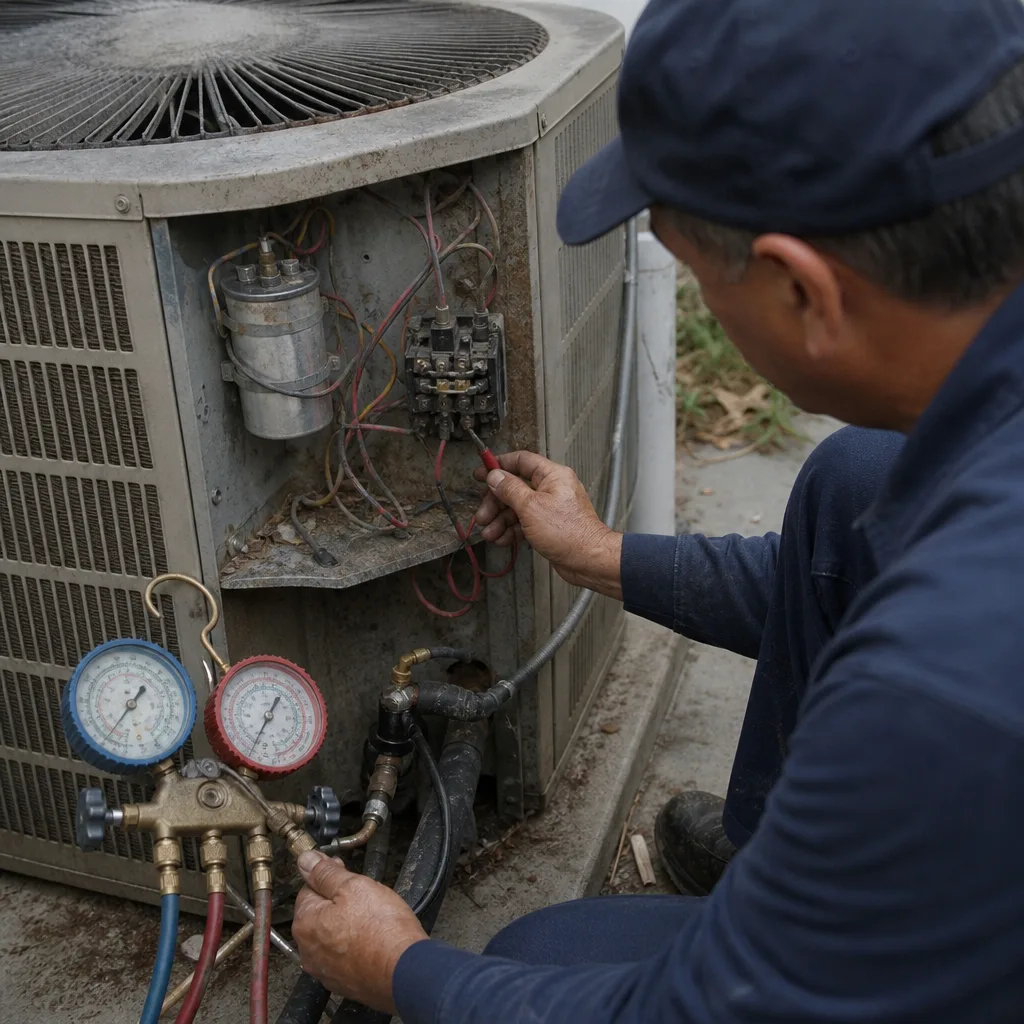 Before
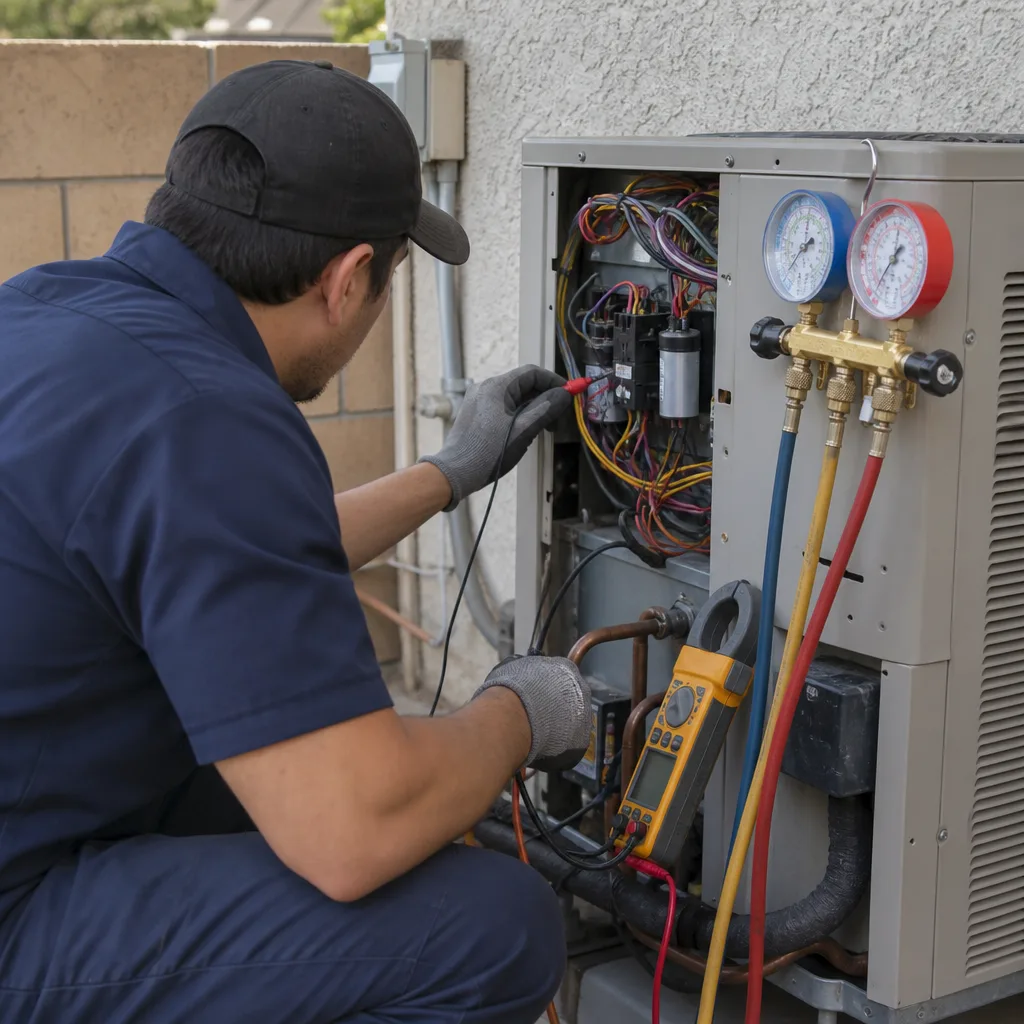 After
After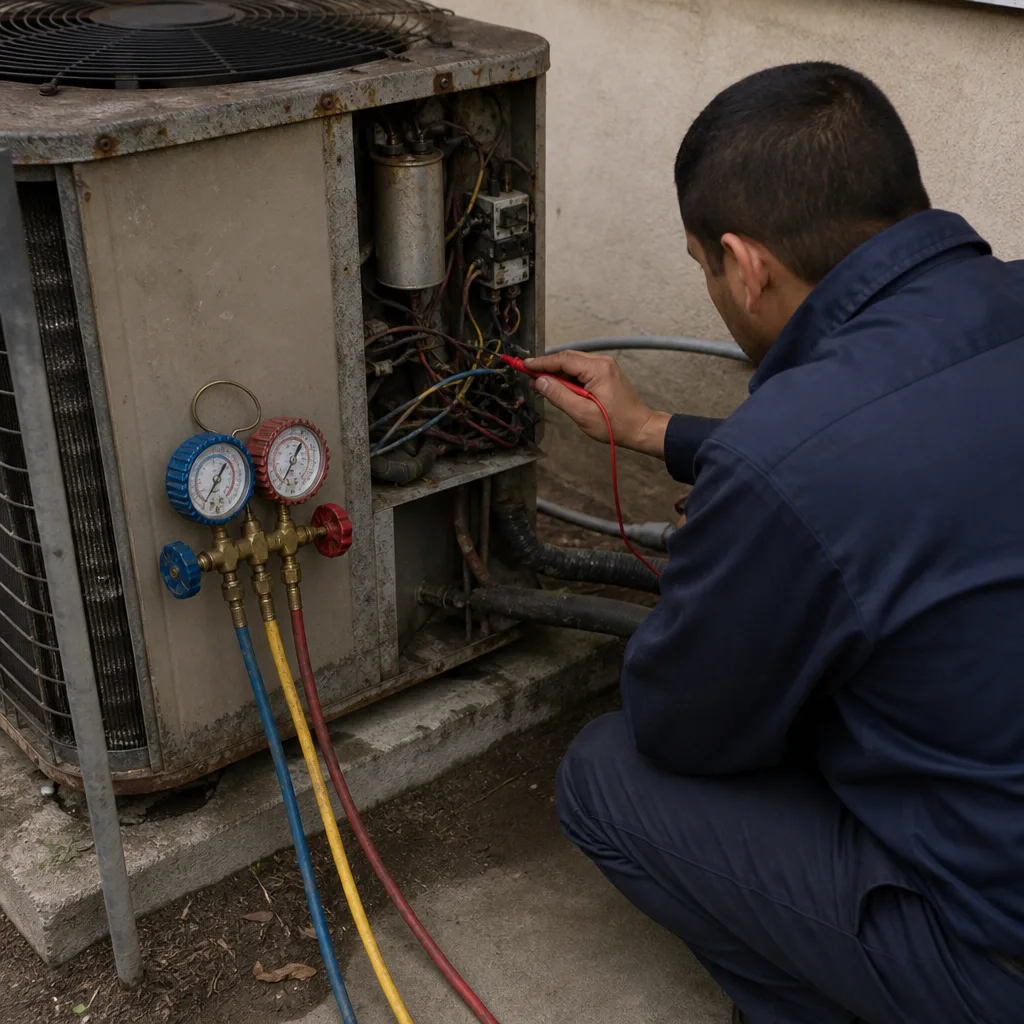 Before
 After
AfterReplacement Cost & What’s Included
Most Carrier capacitor replacements in Los Angeles run $175 – $375 installed, with the part itself typically accounting for $25 – $90 of that total. The labor and the service call make up the rest. Here’s the honest breakdown:
- Dual-run capacitor (single part, serves both compressor and fan): $175 – $275 installed
- Separate start capacitor and/or potential relay (more common on older or larger Carrier units): $225 – $375 installed
- Heavy-duty aftermarket capacitor upgrade (AmRad or equivalent made in USA): $200 – $325 installed
What drives the range is the capacitor type, whether your unit uses one dual-run part or separate start and run components, and the age of the system. What’s included every time: the correct replacement capacitor matched to your Carrier spec, a check of the contactor and wiring connections (a failing capacitor often takes the contactor down with it), and a written price before any work begins. No price changes at the door, ever. That’s the Kingswell Way, and it’s been the rule since we opened in 2003.
Every capacitor replacement we do carries our 365-Day Done Right Promise in writing. If the repair fails inside a full year, the second visit is free. No diagnosis charge, no labor charge, no argument. The guarantee is printed on the paperwork before our tech leaves your house.
DIY or Call Us?
A capacitor stores an electrical charge even after the power is off, which means it can discharge into you if it’s handled carelessly. That’s the honest safety warning, and it’s why we don’t recommend this as a DIY repair. The electrical panel on your condenser is safe to open if the breaker is off, and taking a photo of the capacitor label for us is genuinely helpful. But replacing the capacitor yourself means working inside a live electrical panel, choosing the right microfarad spec, and handling a component that can hold a charge strong enough to cause serious injury. This isn’t like swapping a furnace filter.
What you can safely do: check the breaker, check that the thermostat is calling for cooling, and take the photo we mentioned. Then call us at (213) 531-5904. A human picks up, day or night. We’ll tell you what we think it is over the phone, get a tech to you the same day in most cases, and have the right capacitor on the truck so the fix happens in one visit. In a city where the heat hits in April and doesn’t quit until November, a working capacitor isn’t optional. It’s the difference between sleeping well and not sleeping at all.
FAQs
A Carrier capacitor in Los Angeles typically lasts 4 to 8 years, which is noticeably shorter than the 8 to 15 years you see in cooler climates, because sustained heat and direct sun exposure break down the internal dielectric faster. We replace them more often in the San Fernando Valley and inland areas than in coastal neighborhoods like Santa Monica or Playa del Rey. If your unit runs hard all summer, expect replacement closer to the 4-year mark.
No, capacitors can’t be repaired, only replaced, and a new one typically costs $25 – $90 for the part itself. The failure is internal and irreversible. The only real question is whether to use a standard replacement or a heavy-duty one that withstands Los Angeles heat better, and we’ll show you both options with the price difference before we install anything.
A Carrier capacitor replacement takes 30 to 60 minutes for a trained tech once they’re at your unit, and most jobs are completed in a single visit. The work includes discharging the old capacitor safely, matching the new part to your unit’s spec, swapping it in, and testing the compressor and fan under load to confirm everything pulls the right amperage.
Yes, our techs carry the most common Carrier-compatible dual-run capacitors (35/5, 40/5, 45/5, and 50/5 µF in both 370 and 440 volt), along with start capacitors, relays, and contactors from Trane and Lennox systems we also service. If your unit needs a less common value we can usually have it in hand the same day from a local Los Angeles supply house.
If you’ve got a Carrier system that’s humming, stalling, or completely silent, call (213) 531-5904. We’ll give you a straight answer on what’s wrong and a written price before any tool comes out. If it moves air or makes heat, we can sort it out.
Written by Victor Mancini, Owner, Cold Harbour Heating and Air Los Angeles at Cold Harbour Heating and Air Los Angeles, serving Los Angeles and nearby areas.