
 Furnace & heating
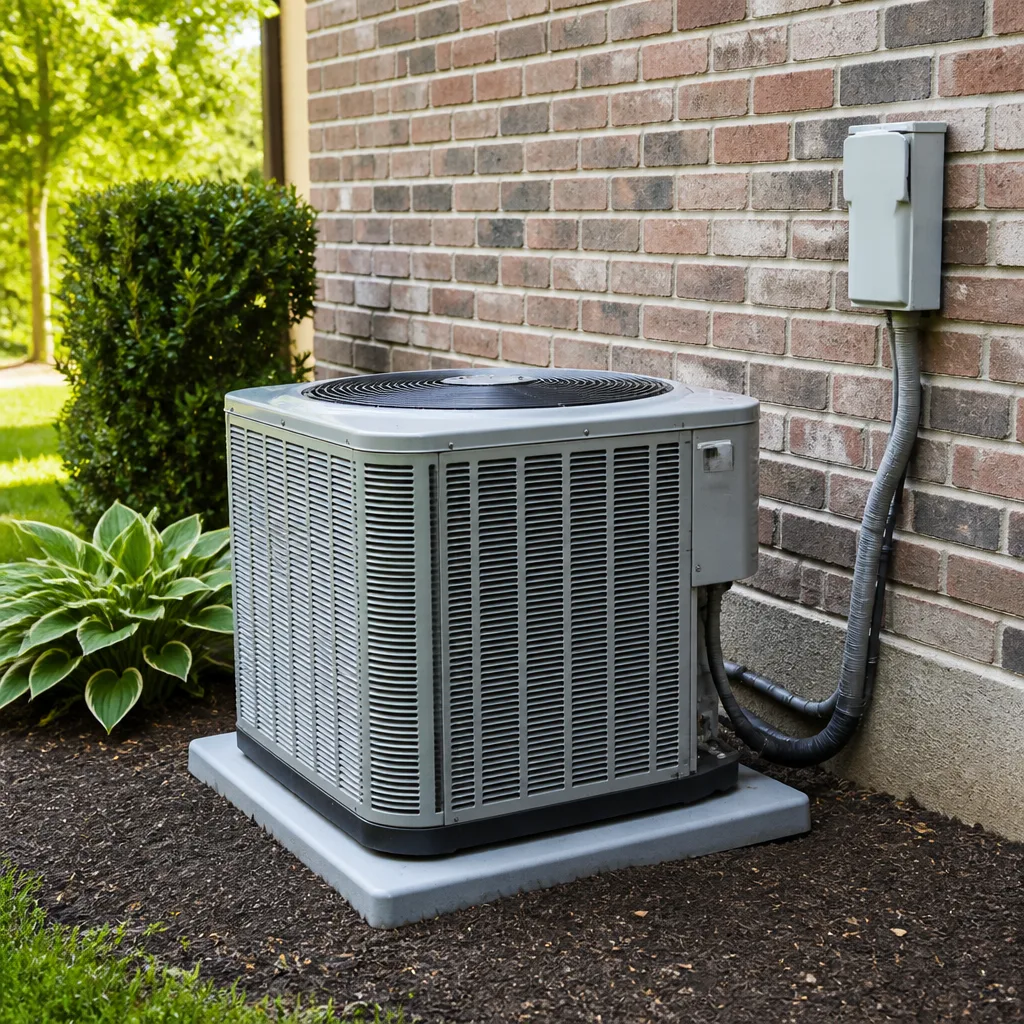 AC repair
 Heat pumps
 Ductless mini splits
 Carrier
 Trane
Trane Goodman
Seasonal tune-up and full diagnostic on your Carrier, Trane, or Goodman system - readings shown to you before any repair is proposed
Diagnosis first, numbers second - you approve the repair price before a single part goes in.
Get your free estimateRheem Capacitor Replacement: The Los Angeles Owner’s Guide
A Rheem capacitor replacement in Los Angeles typically runs $175 – $385 installed, depending on whether it’s a single or dual-run capacitor and where your condenser unit sits. We stock Rheem-compatible capacitors on our trucks, so most swaps happen same-day. The way owners usually find out is simple: the AC is running but the air coming out of the vents is warm, or the outside unit hums for a few seconds and then shuts off. That hum is the compressor trying to start without the electrical boost a capacitor provides. In LA’s summer heat, that part fails more often than people realize, and it’s one of the most common repairs we make across the city from June through October.
Which Rheem Models This Applies To
Rheem uses capacitors across nearly every residential AC and heat pump line they’ve built in the last 25 years. The RA13, RA14, RA16, and RA17 condenser series all use round or oval run capacitors. The RP14 and RP15 heat pump lines use dual-run capacitors that serve both the compressor and the outdoor fan motor. Classic Rheem units from the early 2000s, including the RAKA and RARL series, use the same fundamental design.
Here’s the compatibility detail that matters: a Rheem unit’s capacitor rating is stamped on the side of the old capacitor itself, not in the model number. You’ll see two numbers: a microfarad rating (usually 35/5, 40/5, 45/5, or 50/5 on dual-run models) and a voltage rating (370V or 440V). The microfarad rating must match within 5%, but a 440V capacitor can safely replace a 370V one, it’s a higher tolerance rating. We spec this on every visit, never guess it, because a mismatched microfarad rating shortens compressor life.
On the OEM versus aftermarket question: Rheem-branded capacitors are made by the same global manufacturers that produce AmeriCap, Genteq, and Titan HD equivalents. We stock both, and honestly, a quality aftermarket capacitor with the same specs performs identically. The failure point is almost never the brand, it’s the age and the heat load. What our technicians in Victor Mancini’s crew look for is a capacitor that’s bulged, leaking dielectric fluid, or reading below 90% of its rated microfarads on a meter. Anything under that threshold is a failure waiting to happen, even if the unit still starts today.
One gotcha specific to LA: Rheem packaged units and condensers installed on rooftops in neighborhoods like Eagle Rock, Highland Park, and West Adams bake in direct sun all day. We regularly replace capacitors on rooftop Rheem units that failed within 5 to 7 years, while the same part in a shaded ground-level install lasts 10 to 12. Direct sun plus a 110-degree rooftop ambient means the capacitor’s internal dielectric breaks down faster. If your Rheem condenser sits on a roof or against a west-facing wall, expect shorter capacitor life.
Styles & brands we work with
Signs Your Rheem Capacitor Replacement Is Failing
- The outside unit hums but the fan doesn’t spin. The capacitor sends the starting voltage that kicks the fan motor into motion. When it’s weak, you get that low hum from the contactor pulling in, but no rotation. Sometimes a push-start with a stick works temporarily, which tells us the capacitor is the culprit, not the motor.
- The AC runs but blows room-temperature air. On a dual-run capacitor, the compressor side can fail while the fan side keeps spinning. The fan moves air across dead coils, so you feel airflow but no cooling. This is the most common misdiagnosis we see, homeowners assume it’s a refrigerant leak when it’s actually a $30 part.
- The compressor short-cycles. It kicks on for a few minutes, shuts off, tries again ten minutes later. A failing capacitor can’t sustain the electrical phase needed to keep the compressor running under load. Short-cycling is both a symptom and a cause, it accelerates wear on the compressor itself.
- Higher electric bills with no change in thermostat settings. A weak capacitor makes the compressor work harder to start every cycle. That inrush current spike, repeated dozens of times a day, shows up on your LADWP bill before you notice it at the vent.
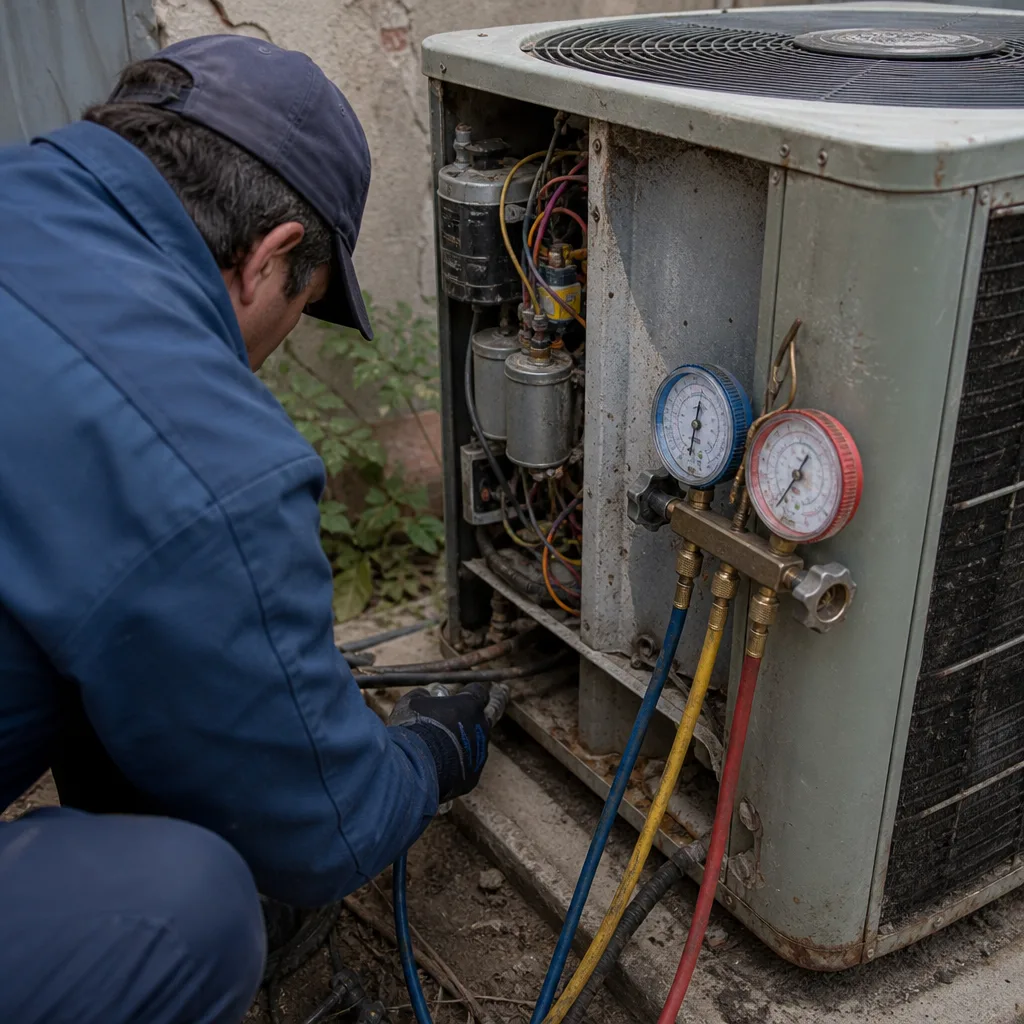
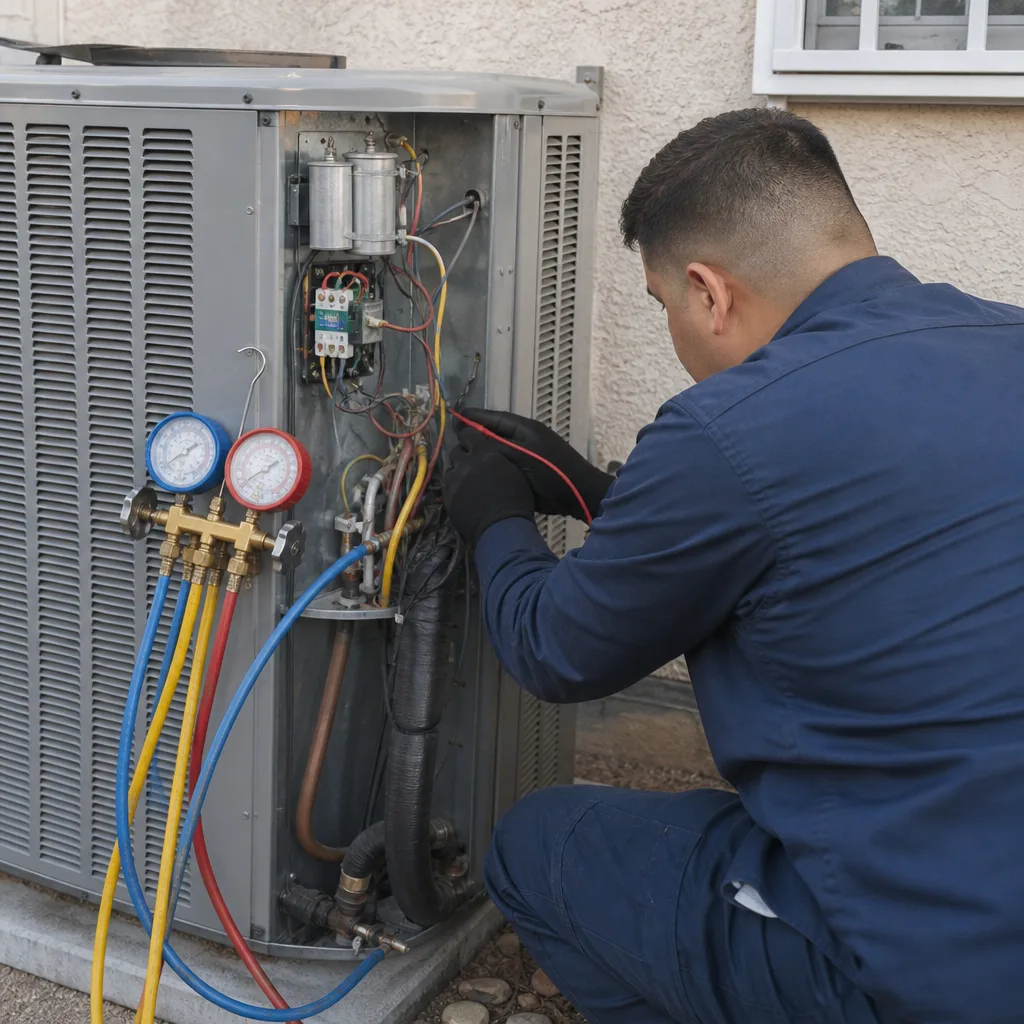
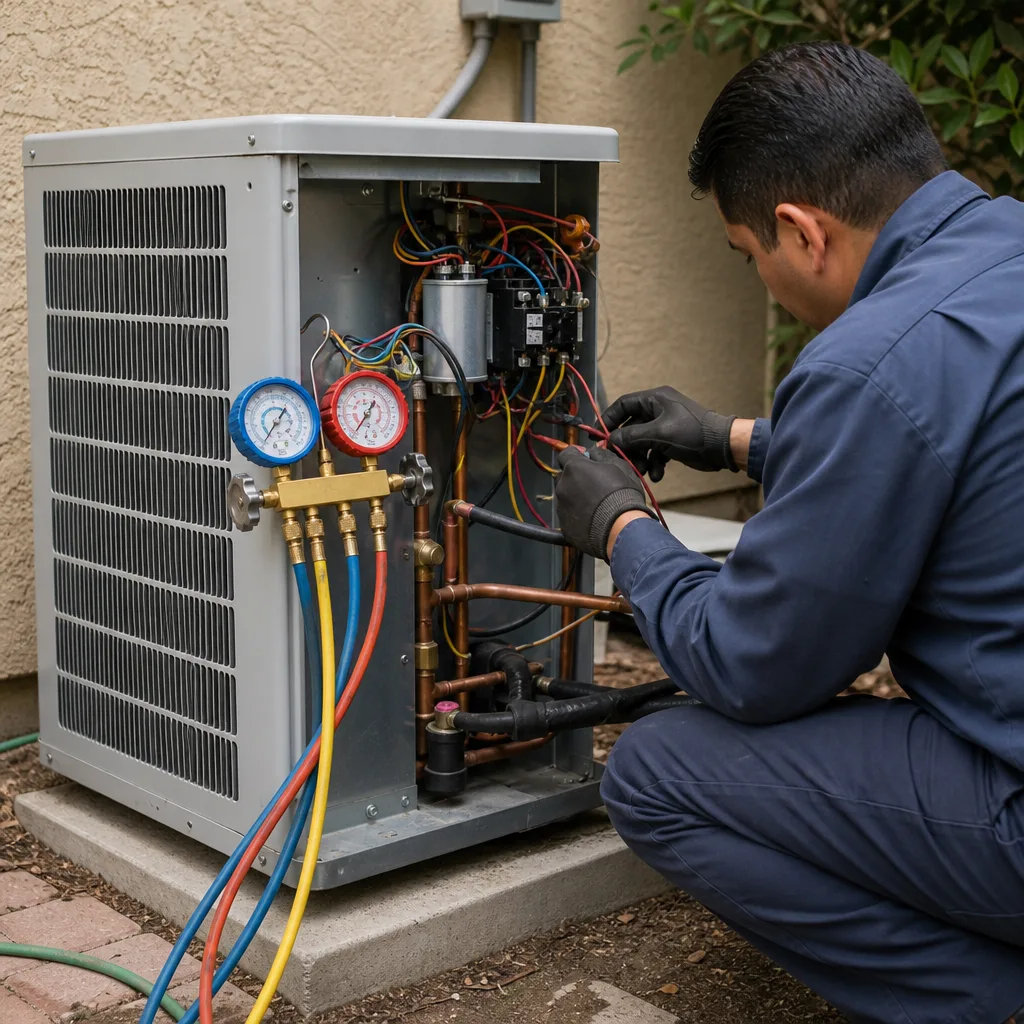
- Visible bulging or leaking on the capacitor body. If you open the condenser panel and see a capacitor that looks swollen like a soup can about to burst, or there’s oily residue around the terminals, that part is done. The dielectric fluid inside has broken down from heat cycling. Do not touch it with bare hands, capacitors store charge even when the unit is off.
See the difference
 Before
 After
After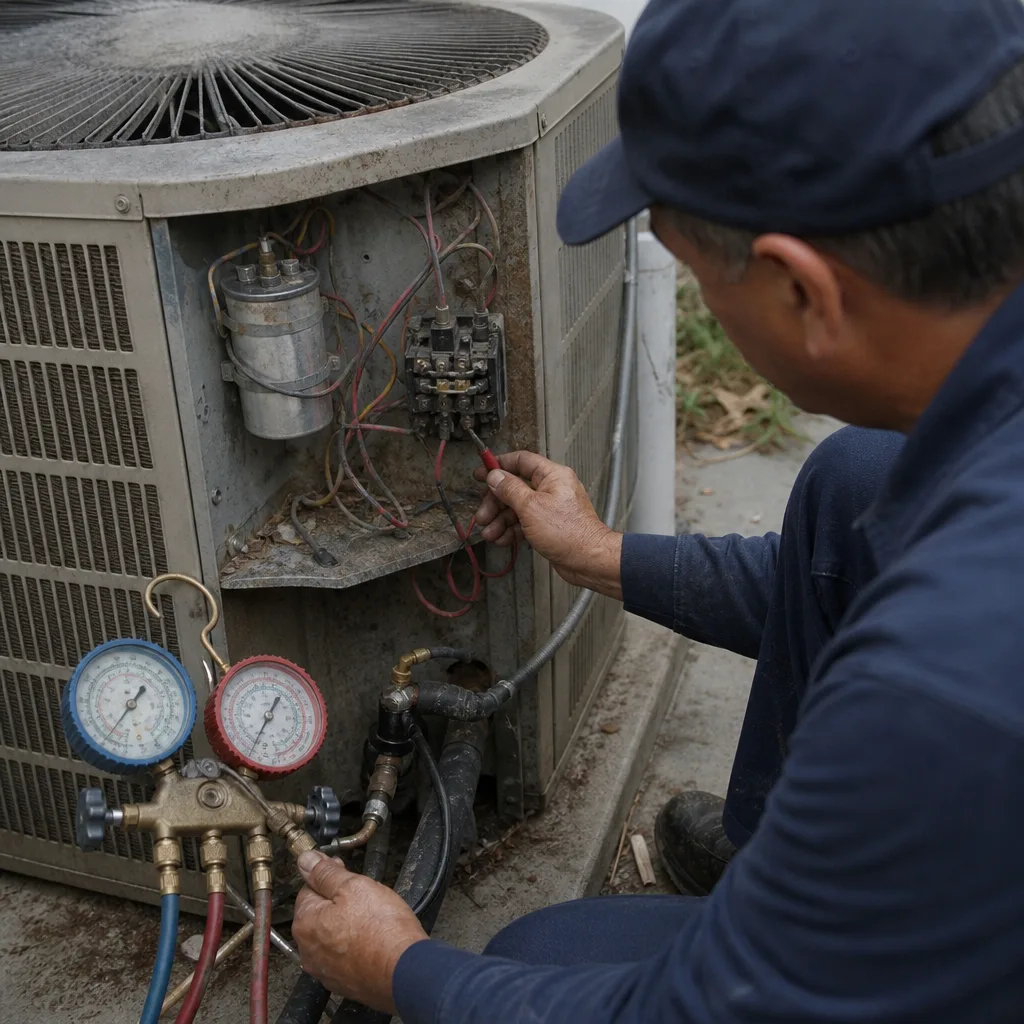 Before
 After
After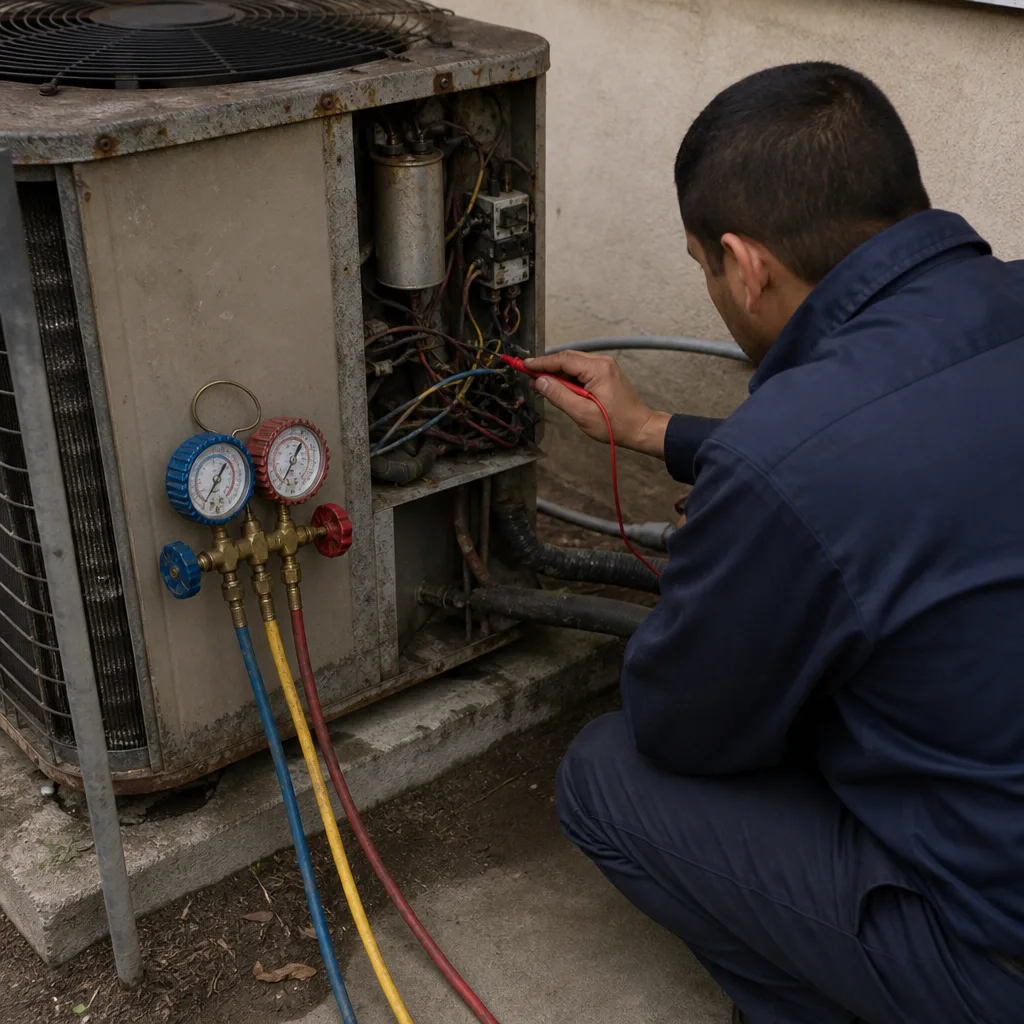 Before
 After
AfterReplacement Cost & What’s Included
Most Rheem capacitor replacements in Los Angeles run $175 – $385, parts and labor included. Here’s what moves the number:
- Single-run vs dual-run: A single capacitor serving only the fan runs $175 – $240 installed. A dual-run serving compressor and fan together runs $220 – $385 installed.
- Capacitor spec: Higher microfarad ratings and 440V tolerance units cost a few dollars more at the supply house. Not enough to move the quote more than $20 or $30.
- Access: Ground-level condensers with easy panel access are the low end of the range. Rooftop units, units behind gates, or Rheem packaged systems on commercial buildings run higher because of ladder work and time.
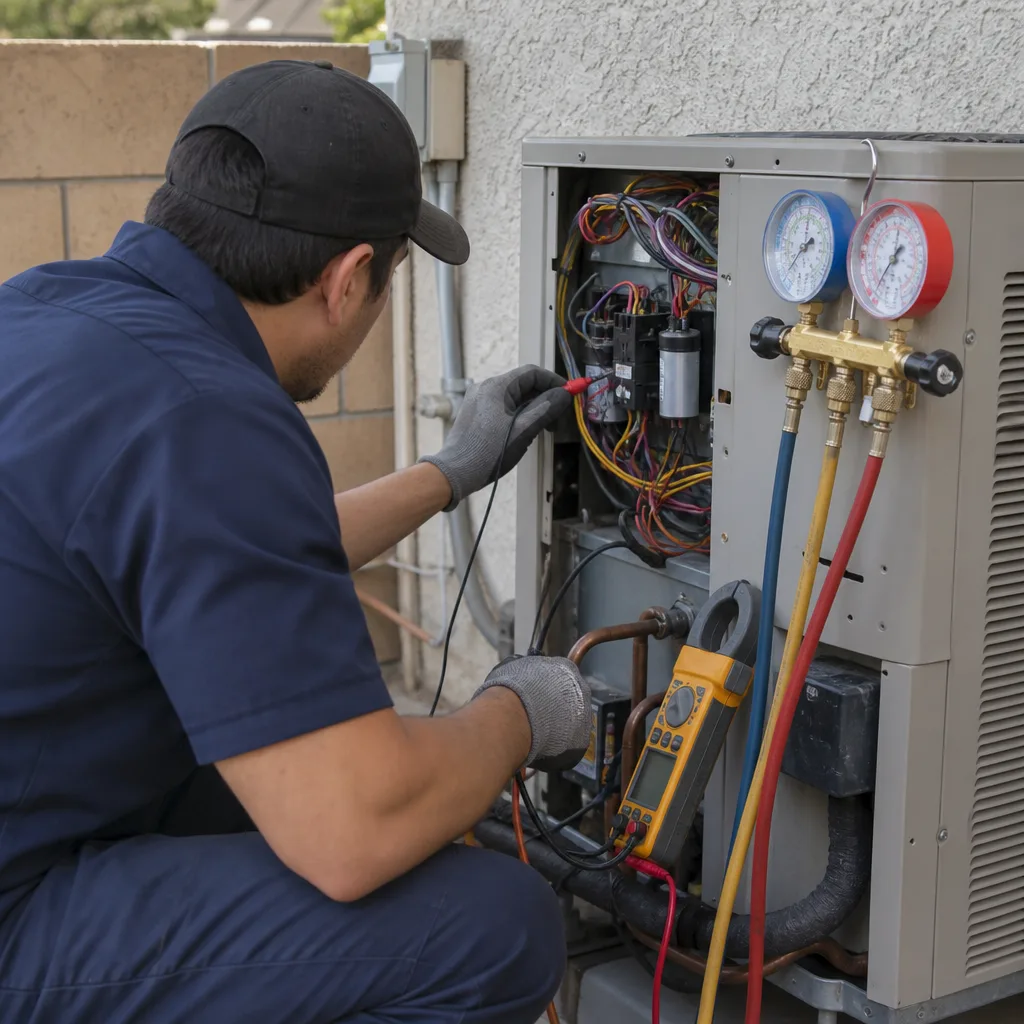
Every capacitor replacement from Cold Harbour Heating and Air Los Angeles includes the written price before we touch a tool, the new capacitor, the labor to swap it, and a bench test of the old part on a meter so you see exactly what failed. We verify the microfarad reading on the new part before installing it, because even brand-new capacitors can sit on a shelf too long. The repair is covered by our 365-Day Done Right Promise: if that capacitor fails within a year, we come back and replace it at no charge. That guarantee is written down on your invoice, not just mentioned. Victor Mancini has insisted on that paperwork policy since the company opened in 2003, and it’s why our Rheem capacitor callbacks are rare.
If you’re also hearing a grinding noise from the condenser fan, let the technician know when you call. A seized fan motor will take out a brand-new capacitor in weeks. We check fan motor amp draw on every capacitor replacement.
DIY or Call Us?
Here’s the honest split. You can safely check two things without opening the panel: is the outside unit humming but not spinning, and does the fan blade turn freely when the power is off. If the blade spins freely and the unit hums without starting, it’s very likely a capacitor. That’s useful information to have when you call us.
What we don’t recommend is opening the condenser panel yourself. Capacitors store a charge that can deliver a serious shock even with the disconnect pulled. A dual-run capacitor in a 240V Rheem condenser holds enough juice to put a grown man on the ground. The terminals need to be discharged properly with a resistor, not a screwdriver across the posts, which can arc and damage the new part. This isn’t a “turn off the breaker and you’re fine” situation. Every year we get called to fix units where a homeowner tried this, crossed a wire, and blew a control board that costs five times what the capacitor did. The part is cheap. The expertise is what you’re paying for.
If your Rheem condenser is humming, call (213) 531-5904 and tell us the model number off the nameplate. We’ll bring the right capacitor, the right meter, and a written price before we start. If it moves air or makes heat, we can sort it out.
FAQs
A Rheem capacitor typically lasts 5 to 12 years, with shorter lifespans in Los Angeles on units exposed to direct sun or rooftop heat. We see 5 to 7 year lifespans on west-facing and rooftop condensers across the LA basin, and 10 to 12 years on shaded ground-level installs. If your capacitor is past the 8-year mark and you’re having startup issues, it’s a candidate for replacement before it fails outright. Call (213) 531-5904 and we can test it on-site.
No, a failed capacitor is a sealed component with no serviceable parts inside. The dielectric material inside degrades over time, and there’s no way to restore it. Replacement is the only repair. The good news is it’s one of the least expensive AC repairs you’ll ever authorize, and we carry the part on the truck.
Most Rheem capacitor replacements take 30 to 60 minutes from pulling up to pulling away. Includes panel removal, safe discharge of the old part, meter testing the new part, installation, startup test, and a final amp draw check. Rooftop units add time for ladder setup, but we quote the time honestly before you approve the work.
Yes, our service trucks carry a full range of dual-run and single-run capacitors in the ratings common to Rheem equipment, including 35/5, 40/5, 45/5, and 50/5 microfarad ratings in both 370V and 440V. We also carry quality equivalents from Genteq and Titan HD. If your unit uses an uncommon spec, the supply house run is under an hour, and we’ll tell you that upfront.
Written by Victor Mancini, Owner, Cold Harbour Heating and Air Los Angeles at Cold Harbour Heating and Air Los Angeles, serving Los Angeles and nearby areas.