
Last updated October 16, 2026
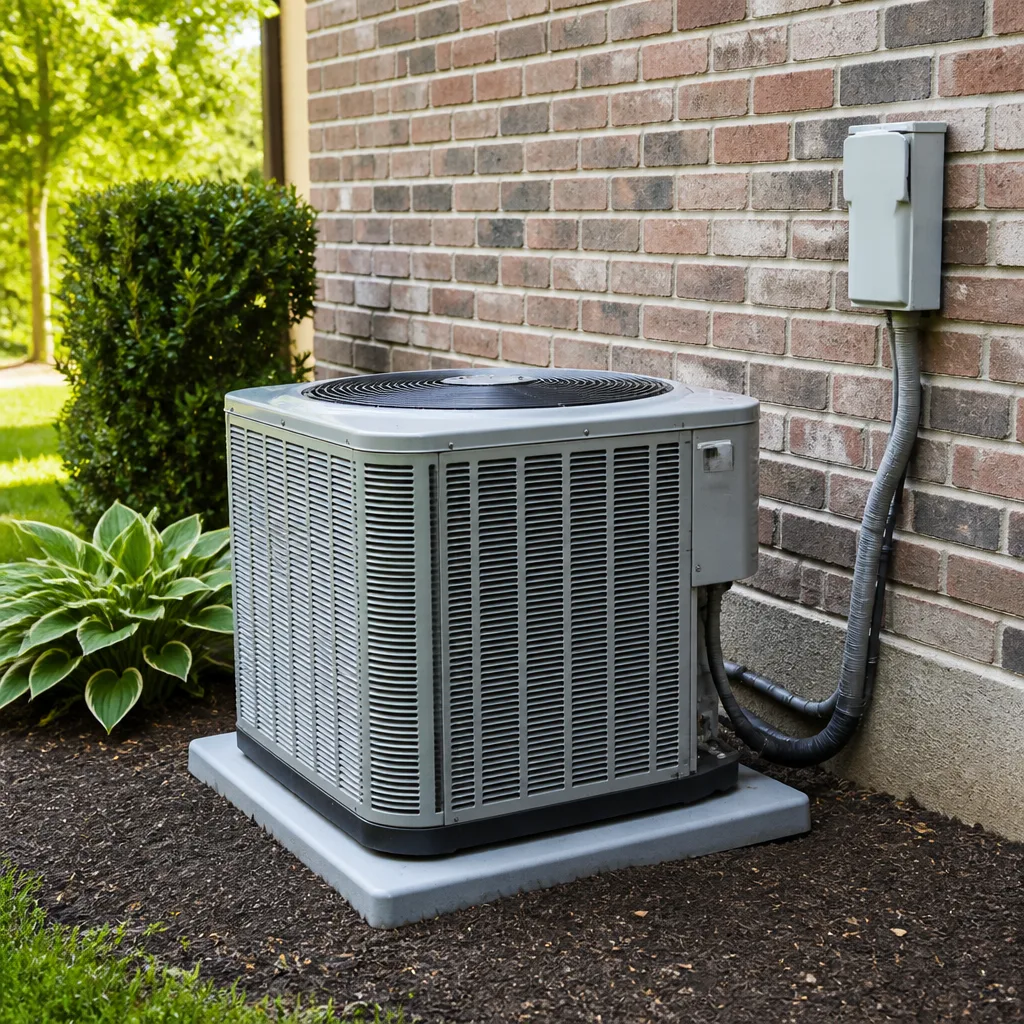 AC repair
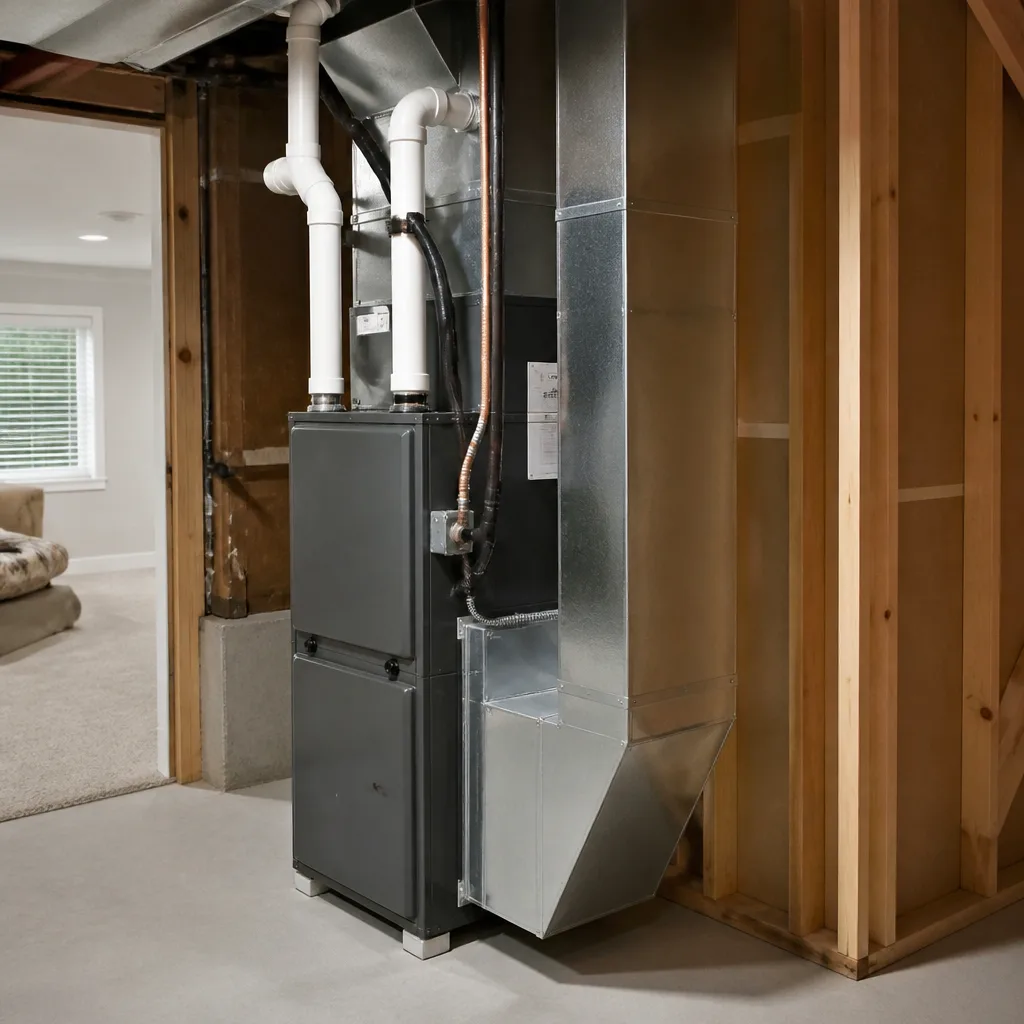 Furnace & heating
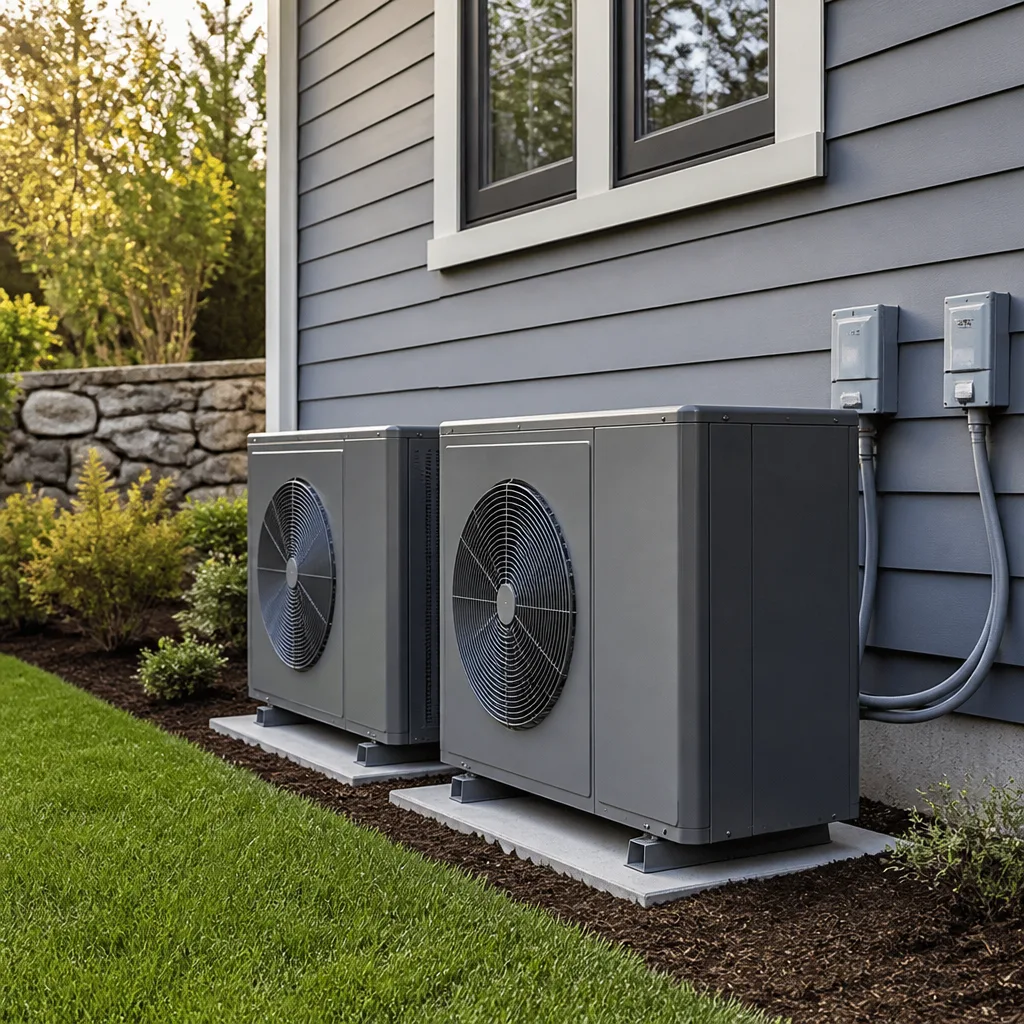 Heat pumps
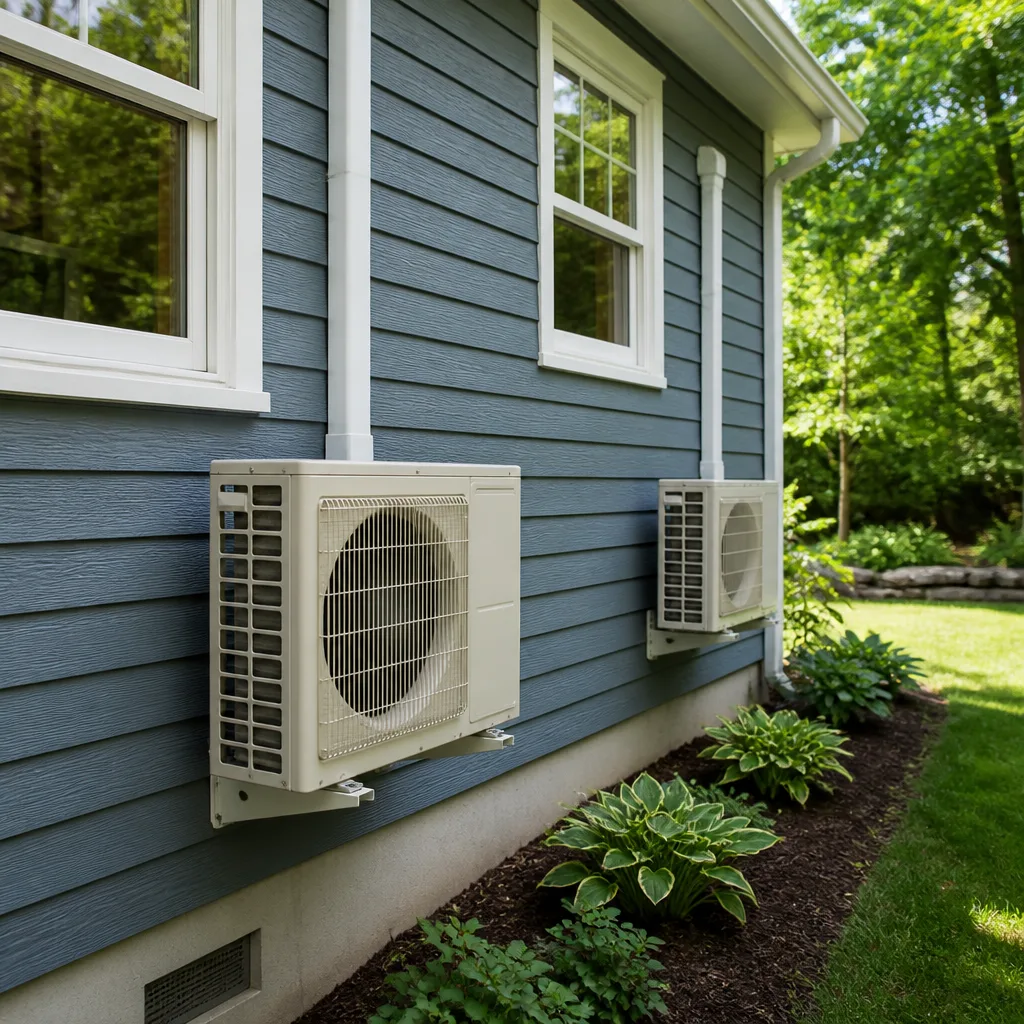 Ductless mini splits
 Carrier
 Trane
Trane Goodman
Seasonal tune-up and full diagnostic on your Carrier, Trane, or Goodman system - readings shown to you before any repair is proposed
Diagnosis first, numbers second - you approve the repair price before a single part goes in.
Get your free estimateDIY vs Professional HVAC: The Los Angeles Homeowner’s Decision Guide
Most homeowners who attempt their own HVAC work in Los Angeles aren’t reckless. They’re responding to a quote that felt too high, a diagnosis that felt too vague, or a bad experience with a contractor who didn’t show up. That frustration is real, and some HVAC tasks genuinely belong in a homeowner’s hands. But California law draws a specific line through the middle of this question, and most national DIY guides ignore it entirely: you can legally work on your own furnace or air conditioner in your own home, but the moment refrigerant is involved, federal law treats you differently than it treats a licensed contractor. This guide maps exactly where your rights end and your liability begins in Los Angeles, what five tasks are genuinely worth doing yourself, and when calling a professional the same day costs less than the DIY attempt you were about to start.
Styles & brands we work with
Quick Answer
In Los Angeles, a homeowner can legally perform basic HVAC maintenance on their own property, including filter changes, thermostat replacement, outdoor unit cleaning, and drain line flushing, without a license. However, any work involving refrigerant handling, electrical panel modifications, gas line connections, or system installation requires either an EPA Section 608 certification, a California C-20 HVAC contractor license, or both, and doing this work yourself can void your manufacturer warranty and trigger a homeowner’s insurance exclusion. For anything beyond basic maintenance, hiring a licensed professional is usually cheaper than the cost of a mistake-see our step-by-step guide on hiring a HVAC contractor in Los Angeles.
Table of Contents
- What California Law Actually Says About DIY HVAC Work
- The EPA Section 608 Rule: Why Refrigerant Changes Everything
- The Five HVAC Tasks Genuinely Worth Doing Yourself
- How DIY Work Affects Your Homeowner’s Insurance and Manufacturer Warranty
- The True Cost Comparison: DIY Attempts vs. Same-Day Professional Repair
- Los Angeles-Specific Factors That Change the DIY Calculus
- Common Mistakes to Avoid
- When to Call a Professional
- Frequently Asked Questions
- The Bottom Line
What California Law Actually Says About DIY HVAC Work
California Business and Professions Code Section 7048 contains the provision most national DIY guides never mention. It says, in plain terms, that a homeowner who owns and occupies a residential property can perform work on that property without holding a contractor’s license. This is the legal backbone of the “do it yourself” right in Los Angeles. You can swap a capacitor, clean a condenser coil, replace a thermostat, and change a filter without anyone from the state telling you otherwise.
But the right ends at a specific point. California requires a C-20 Warm-Air Heating, Ventilating and Air-Conditioning Contractor license for any HVAC work performed on a property you do not own and occupy. The moment you help a neighbor, work on a rental unit you own, or touch a system in a duplex where you live in one unit and rent the other, you are no longer a homeowner doing your own work. You are an unlicensed contractor, and that carries civil penalties up to $15,000 per violation under California law, plus potential criminal charges for repeat offenses.
The second boundary is harder to see and catches more people. Even on your own Los Angeles home, any HVAC work that requires a permit must be performed by a licensed contractor or, if done by the homeowner, the homeowner must sign a declaration at the building department accepting full liability for the work; our guide to HVAC permits, codes & inspections in CA explains what you need to know. In the city of Los Angeles, permits are required for furnace replacements, air conditioning installations, ductwork modifications, and any gas line work. The Los Angeles Department of Building and Safety does not issue HVAC permits to unlicensed individuals for work on systems serving more than one dwelling unit, period.
Here is what that means in practice:
- Legal without a license on your own LA home: filter replacement, thermostat replacement, outdoor condenser coil cleaning, drain line flushing, vent register cleaning, and visual inspections.
- Legal without a license but requires a homeowner permit: none of the common HVAC repairs fall here, because most mechanical repairs that touch gas, refrigerant, or electrical panels require a licensed contractor under the current California Mechanical Code.
- Requires a C-20 contractor license: refrigerant handling of any kind, compressor replacement, evaporator coil replacement, heat exchanger replacement, gas valve replacement, any new system installation, any ductwork installation or modification.
Victor Mancini, owner at Cold Harbour Heating and Air Los Angeles, puts it this way: “Most homeowners we talk to in neighborhoods like Sherman Oaks and Silver Lake are surprised to learn that the law doesn’t care how skilled they are. It cares about whether refrigerant, gas, or high-voltage electricity is involved. Those three things draw the legal line, and they draw it in the same place for everyone.”
The EPA Section 608 Rule: Why Refrigerant Changes Everything
Here is the fact most DIY HVAC content skips entirely: the Environmental Protection Agency’s Section 608 regulations apply to everyone who handles refrigerant, not just contractors. Under 40 CFR Part 82, any person who adds or removes refrigerant from an air conditioning or refrigeration system must hold an EPA Section 608 certification. There is no homeowner exception. There is no “personal use” exemption. If you buy a can of R-410A at an auto parts store in Glendale and connect it to your home condenser in Echo Park, you are legally in the same category as an unlicensed contractor doing the same work.
The fine structure is specific. EPA penalties for Section 608 violations currently run up to $44,539 per day, per violation. The EPA has pursued enforcement against individual homeowners in California, not just businesses. In practice, the agency more often targets the sale of refrigerant to uncertified buyers, which is why most refrigerant wholesalers in Los Angeles will not sell to anyone without a Section 608 card. That is a good thing for safety, because refrigerant burns are one of the most common serious injuries in DIY HVAC work, and a system overcharged with refrigerant will destroy its own compressor, which is a $1,200 to $2,800 repair on most Los Angeles homes.
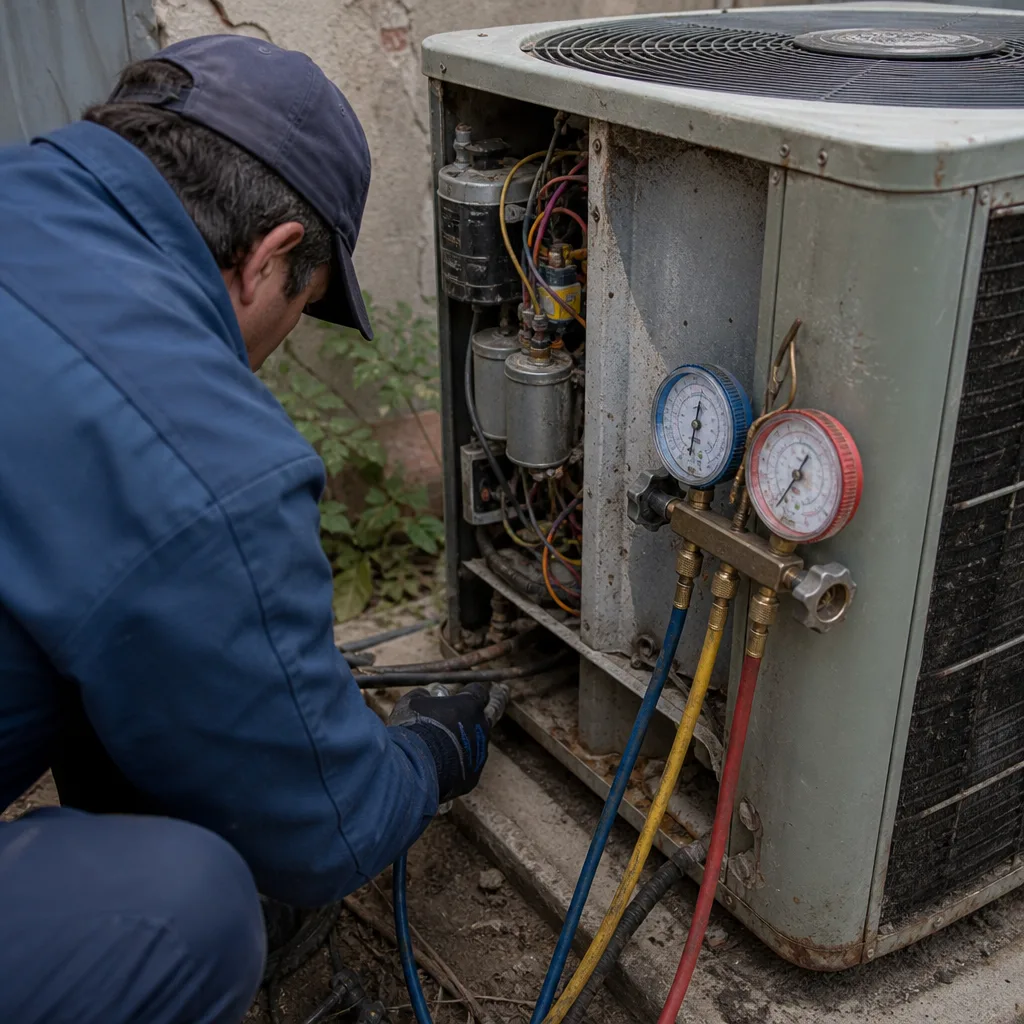
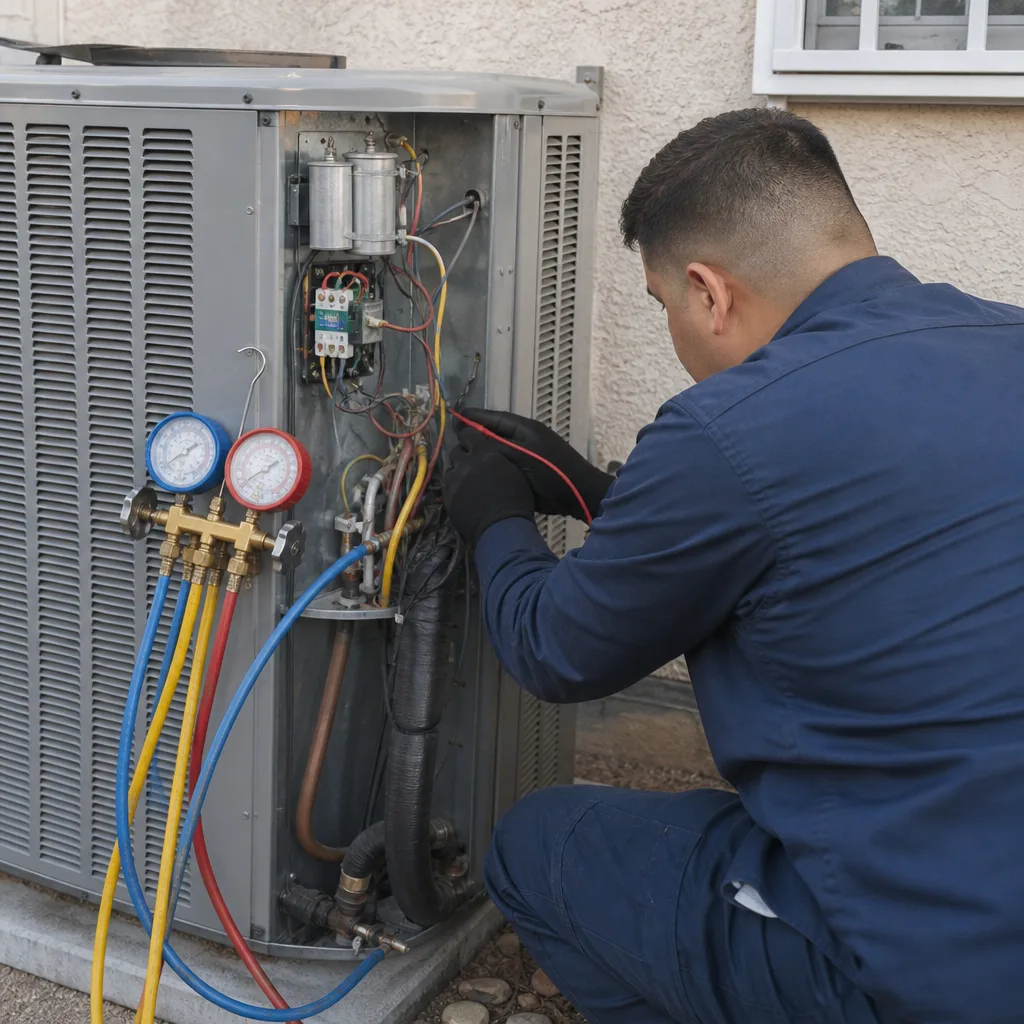
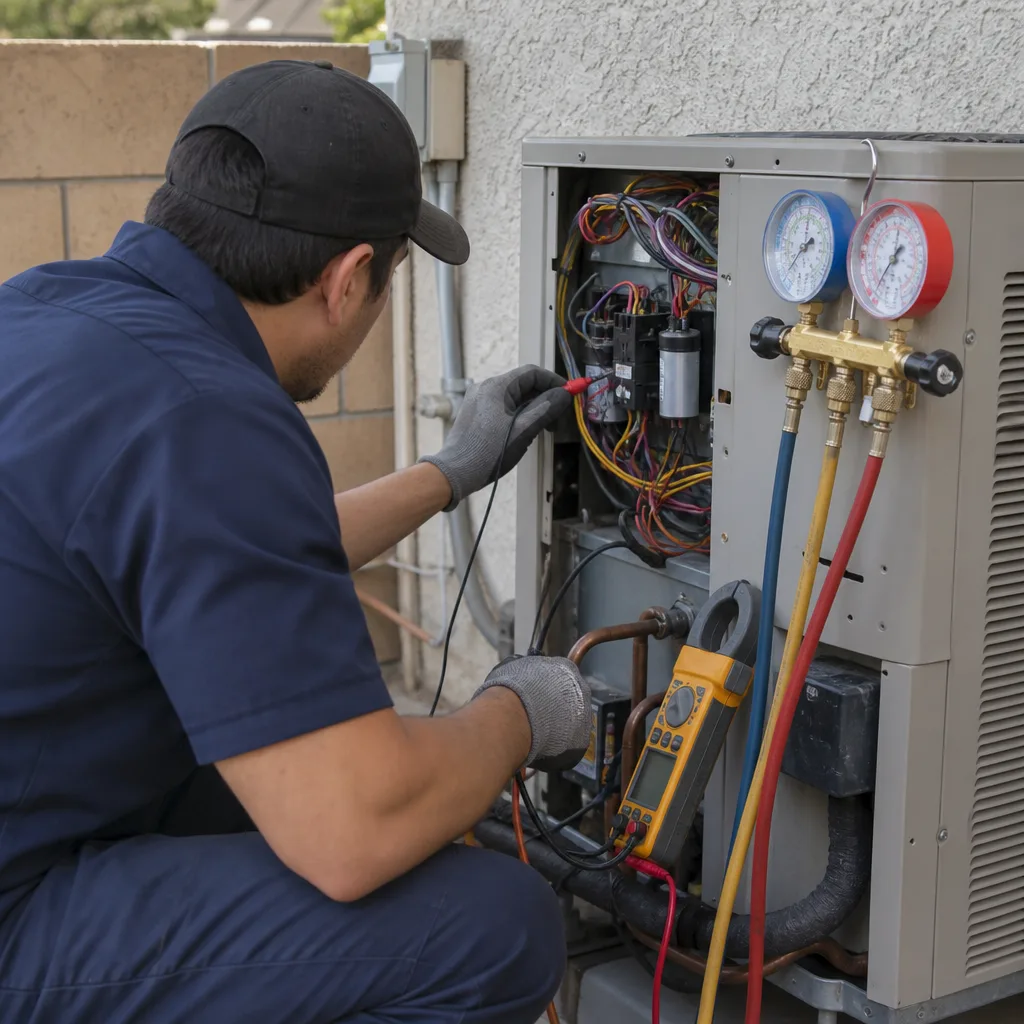
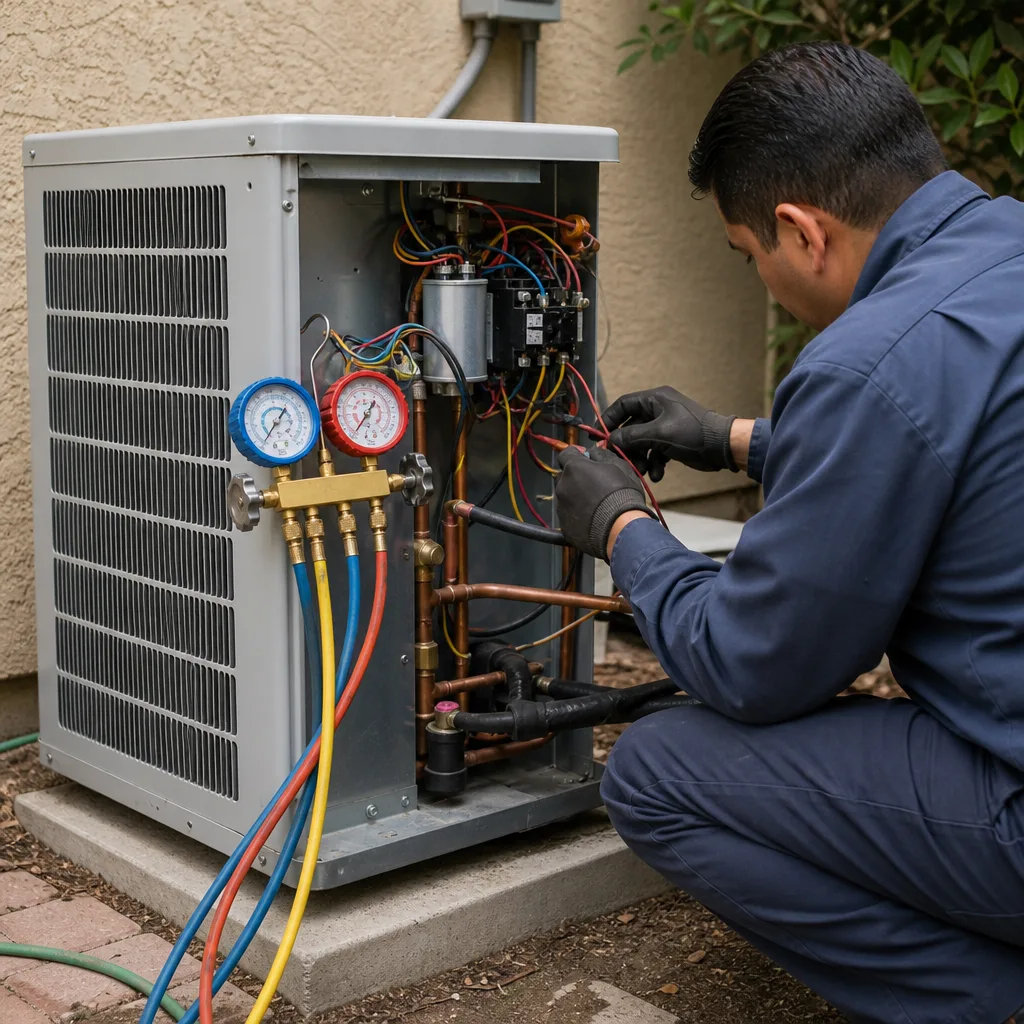
There is also the practical problem: even if you obtain refrigerant somehow, you will not know if the system has the correct charge. Modern air conditioners are designed to operate within a narrow refrigerant range. Undercharging by a few ounces reduces cooling capacity. Overcharging by a few ounces raises compressor pressure and shortens the unit’s life. Diagnosing a charge problem requires a manifold gauge set, a digital scale, and a temperature probe, plus the knowledge to interpret the readings. A licensed technician at Cold Harbour Heating and Air Los Angeles arrives with all of that, plus the recovery equipment required to remove refrigerant legally if the system needs to be opened.
The same federal logic applies to the new A2L refrigerants, including R-454B and R-32, which began appearing in new residential systems in 2025. These refrigerants are classified as mildly flammable, and their handling requirements are stricter, not looser. Los Angeles homeowners with newer systems should treat any refrigerant work as strictly off-limits for DIY.
The Five HVAC Tasks Genuinely Worth Doing Yourself
Not every HVAC task is a trap. Five maintenance items are safe, legal, and genuinely worth doing yourself if you live in Los Angeles, where dust, airborne particulates, and dry-season debris shorten the life of neglected systems. Here they are, with honest time and cost estimates based on what we see across LA neighborhoods from Westchester to Highland Park.
- Filter replacement: 5 minutes, $8 – $25. In Los Angeles, where wildfire smoke and dry dust are regular parts of the year, a clogged filter forces your blower motor to work harder and can drop your cooling capacity by 5 – 15%. Replace your 1-inch filter every 1 – 3 months depending on whether you have pets, carpets, or live near a freeway. This is the single highest-value DIY task in HVAC, and it requires no tools.
- Thermostat replacement: 20 – 45 minutes, $25 – $200. If your thermostat still has mercury or uses a bimetallic strip, replacing it with a modern programmable or smart thermostat can cut your cooling bill in a Los Angeles summer. The key is labeling the wires before you disconnect them and turning off the circuit breaker first. Most thermostats use the same R, C, G, Y, and W terminal labels, and a wrong connection can blow a low-voltage fuse on your furnace control board, which is a $120 – $200 service call.
- Outdoor condenser unit cleaning: 30 – 60 minutes, $0 – $15 in materials. Your outdoor unit pulls air through its coil fins, and in Los Angeles it is pulling in dust, leaves, pollen, and the fine grit that builds up everywhere. Kill the breaker, remove the outer cabinet, and use a garden hose with a nozzle on low pressure to rinse the coil from the inside out. Use a fin comb to straighten bent fins if needed. Skip this for twelve months and they system loses efficiency; skip it for five years and you will likely pay for a coil cleaning or worse.
- Drain line flush: 15 minutes, $5 – $20. Your evaporator coil produces condensation, and that water drains through a PVC pipe to the outside. In Los Angeles, that pipe clogs with algae, dust, and biological growth. Pour one cup of white vinegar or a commercial condensate line cleaner into the drain at the indoor unit every 3 – 4 months. If the line is already blocked, a wet/dry vacuum on the outdoor end usually clears it. Most water leaks from ceiling-mounted units in LA condos are a clogged drain line, not a failed system.
- Vent and register cleaning: 30 – 60 minutes, $0. Remove each supply register and return grille, wash them, and vacuum the duct opening as far as your hose reaches. This does not replace professional duct cleaning, but it does remove the surface dust that recirculates through your Los Angeles home every time the blower runs. It also helps you spot rooms that are not getting enough airflow, which is useful information if you ever call for AC repair in Los Angeles.
How DIY Work Affects Your Homeowner’s Insurance and Manufacturer Warranty
This is the section most DIY guides never write, and it is the one Los Angeles homeowners need most. Most homeowner’s insurance policies in California contain a clause that excludes coverage for damage caused by faulty workmanship or by work performed without required permits. The exact language varies by carrier, but the pattern is consistent: if you replace a furnace board yourself, wire it incorrectly, and start a small electrical fire, your insurer may deny the claim on the grounds that unpermitted owner-performed mechanical work caused the loss. A fire is bad enough. A denied claim after a fire is worse.
The same logic applies to water damage. If you attempt a condensate line repair, make an error, and come home to a flooded hallway in your Los Angeles home, the insurance adjuster will ask who last touched the system. Homeowners who can point to a licensed contractor with liability insurance are in a fundamentally different position than homeowners who have to admit they did the work themselves.
Manufacturer warranties are even less forgiving. Every major residential HVAC brand, including Goodman, Rheem, and York, states in its warranty documentation that coverage applies only when a licensed professional installs and services the equipment. A DIY repair does not automatically void the warranty, but any damage traceable to owner-performed work will be excluded. If you replace a capacitor yourself, install the wrong microfarad rating, and burn out the compressor, the manufacturer has a documented paper trail showing unauthorized work. The compressor warranty is gone, and that is a $1,200 – $2,800 part.
In our experience across Los Angeles, we have seen one homeowner save $180 on a DIY fan motor replacement and then pay $1,400 for a new blower motor assembly plus labor when the wrong rotation direction damaged the wheel. The warranty did not cover it. The math on that one is straightforward.
The True Cost Comparison: DIY Attempts vs. Same-Day Professional Repair
The most common reason Los Angeles homeowners attempt DIY HVAC work is a quote that felt too high. That skepticism is fair, and transparent pricing is part of the way we operate at Cold Harbour Heating and Air Los Angeles. But the DIY-versus-pro decision should be based on a full accounting, not just the first number you see. Here is what a realistic comparison looks like for three common repairs.
- Capacitor replacement: The part costs $15 – $40 at a supply house in Los Angeles if you can find one that sells to the public, online retailers charge $20 – $60 for the same part, and a professional company charges $150 – $280 for the repair, parts and labor included. The DIY path saves roughly $100 – $200, but it requires discharging the old capacitor safely, a mistake that can deliver a shock even with the power off. Most LA homeowners decide this one is a toss-up.
- Condensate pump replacement: A new pump costs $60 – $120 online, and the DIY job takes 1 – 2 hours if everything goes smoothly. A professional replacement in Los Angeles runs $280 – $450. If the DIY job leaks, and that leak runs into a downstairs neighbor’s unit in a WeHo condo, the liability is yours, not the pump’s.
- Compressor replacement: A homeowner cannot legally recover refrigerant, so the DIY path here is effectively closed. A licensed company charges $1,800 – $3,200 for a compressor replacement depending on the brand and system size, and the job includes refrigerant recovery, evacuation, recharge, and a 365-day written guarantee. Attempting this DIY would require equipment costing more than the labor portion of the repair.
The same accounting applies to timing. A failed air conditioner in August in the San Fernando Valley is a heat health matter, not just a comfort matter. Same-day repair from a licensed contractor costs more than a homeowner’s weekend attempt, but the homeowner’s weekend attempt does not produce cooling on Tuesday. For most Los Angeles families, the value of cooled air on the day the system fails outweighs the theoretical savings of a DIY attempt that might work eventually.
Los Angeles-Specific Factors That Change the DIY Calculus
Los Angeles is not a generic market, and three local factors change the DIY-versus-pro decision in ways that national guides do not address.
First, the heat. Los Angeles summer temperatures routinely exceed 95°F in the inland valleys, and heat-related health risks to children, elderly residents, and people with respiratory conditions are real. A system that fails on a Friday night in Northridge cannot wait for a weekend DIY attempt. This is why furnace repair in Los Angeles and AC repair both operate on a faster clock here than they do in milder climates.
Second, the housing stock. Los Angeles contains one of the oldest residential HVAC fleets in the western United States. Many homes in neighborhoods like Los Feliz, Eagle Rock, and Culver City still run systems installed in the 1990s or early 2000s. These systems use R-22 refrigerant, which is no longer manufactured or imported in the United States. The remaining supply is recovered and recycled, and it is legally available only to Section 608-certified technicians. A homeowner with an older system who attempts a DIY leak repair will quickly discover that the refrigerant itself is unobtainable. This becomes a replacement conversation, not a repair conversation, and the AC installation in Los Angeles path is the only practical one.
Third, the permitting environment. The Los Angeles Department of Building and Safety enforces mechanical code requirements for HVAC installations, and many LA County municipalities add their own amendments. A homeowner who installs a new condensing unit without a permit and then sells the home may face a disclosure obligation, a retrofit requirement, or a cancelled escrow. Permits for HVAC replacement in Los Angeles are not expensive, usually $150 – $400 depending on scope, but they require a licensed contractor to pull them in most cases. That structure protects the homeowner more than it inconveniences them.
Common Mistakes to Avoid
- Buying refrigerant without a Section 608 card. Most Los Angeles suppliers will not sell to you, and the ones that will are breaking federal law. Getting caught carries penalties most homeowners cannot absorb.
- Replacing a part without diagnosing the cause. A failed capacitor often points to a failing compressor or a restricted condenser coil. Swapping the capacitor without addressing the root cause means the new one fails in weeks, and you’ve spent money twice.
- Ignoring the breaker panel. Any HVAC work that touches wires should begin at the breaker. More than one Los Angeles homeowner has learned this the hard way in a hot attic in July.
- Using the wrong filter thickness. A 4-inch filter jammed into a 1-inch slot restricts airflow and can cause the evaporator coil to freeze. The fix costs more than the filter savings.
- Assuming YouTube tutorials reflect California code. Many national DIY videos show work that is legal in other states, where licensing and refrigeration rules are looser. Los Angeles follows California law, and California law is stricter.
- Skipping the annual professional inspection. The five DIY tasks listed above are maintenance, not diagnosis. An annual professional inspection catches the failures that DIY work cannot, including refrigerant charge drift, heat exchanger cracks, and electrical connection loosening.
When to Call a Professional
Call a professional when the work involves refrigerant in any quantity, when gas lines are involved, when the repair requires opening the electrical panel or replacing the control board, and when the system has failed during a Los Angeles heat wave and same-day cooling matters more than saving a few hundred dollars. Call when the system is under warranty, because a manufacturer defect will only be covered if a licensed contractor documents the repair. Cold Harbour Heating and Air Los Angeles offers free estimates in Los Angeles, and we put every price in writing before any work begins. Call (213) 531-5904 and a live person answers, day or night.
Frequently Asked Questions
Yes, California law permits a homeowner to perform HVAC work on a property they own and occupy, but any work involving refrigerant, gas lines, or electrical panels requires certifications and permits that make a licensed contractor the practical and legal choice. In Los Angeles, system replacement also requires a permit, and most homeowners hire a licensed C-20 contractor to handle that process. Call (213) 531-5904 for an exact quote on your replacement.
EPA penalties for Section 608 violations currently reach up to $44,539 per day, per violation, and the agency has pursued enforcement against individuals, not just businesses. Refrigerant sales in Los Angeles are restricted to certified technicians, which makes obtaining refrigerant legally difficult for a homeowner in the first place.
DIY work does not automatically void a warranty, but any damage traceable to owner-performed work is excluded from coverage. Manufacturers including Goodman, Rheem, and York all require licensed professional installation and service as a condition of warranty coverage. If a DIY repair causes a compressor failure, the compressor warranty is gone.
Most residential HVAC repairs in Los Angeles run between $150 and $650 depending on the part and the system-see our HVAC cost breakdown for Los Angeles homeowners for detailed 2026 pricing. Capacitor replacements typically cost $150 – $280, blower motor replacements run $400 – $800, and compressor replacements run $1,800 – $3,200. Every repair from Cold Harbour Heating and Air Los Angeles includes a written price before work begins and a 365-day written guarantee.
A good rule of thumb: multiply the repair cost by the age of the system. If the system is more than 12 years old and the repair exceeds 30% of a replacement cost, replacement is usually the better financial choice, especially in Los Angeles where older systems may still use R-22 refrigerant, which is no longer produced. Call (213) 531-5904 and we will give you an honest assessment.
Yes, Cold Harbour Heating and Air Los Angeles answers the phone with a live person 24 hours a day, 7 days a week, and we offer same-day service for AC and furnace repairs across Los Angeles. Call (213) 531-5904 and we will give you a firm arrival window before you hang up.
The Bottom Line
The DIY-versus-pro decision in Los Angeles is not a skill question, it is a liability question. California gives you the right to work on your own HVAC system, but federal refrigerant rules and manufacturer warranty language mean the most consequential repairs are legally and financially out of reach for a homeowner acting alone. The five maintenance tasks worth doing yourself, filter swaps, thermostat replacements, coil cleaning, drain flushes, and vent cleaning, will keep your system running longer and reduce the number of professional visits you need; explore more guides & resources for additional homeowner tips. For everything else, the math usually favors a licensed contractor with written pricing and a written guarantee, because the cost of a mistake is almost always higher than the cost of the repair.
Written by Victor Mancini, Owner at Cold Harbour Heating and Air Los Angeles, serving Los Angeles since 2003.
See the difference
 Before
 After
After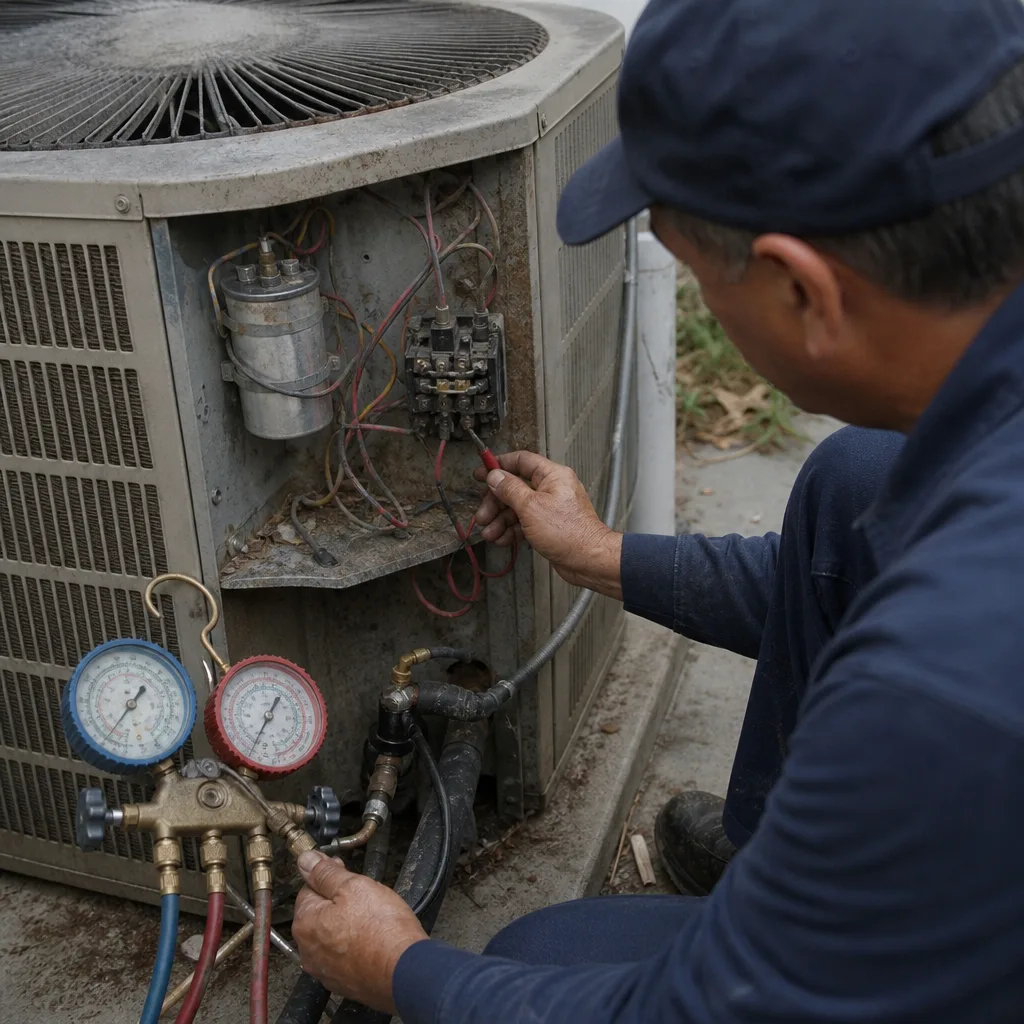 Before
 After
After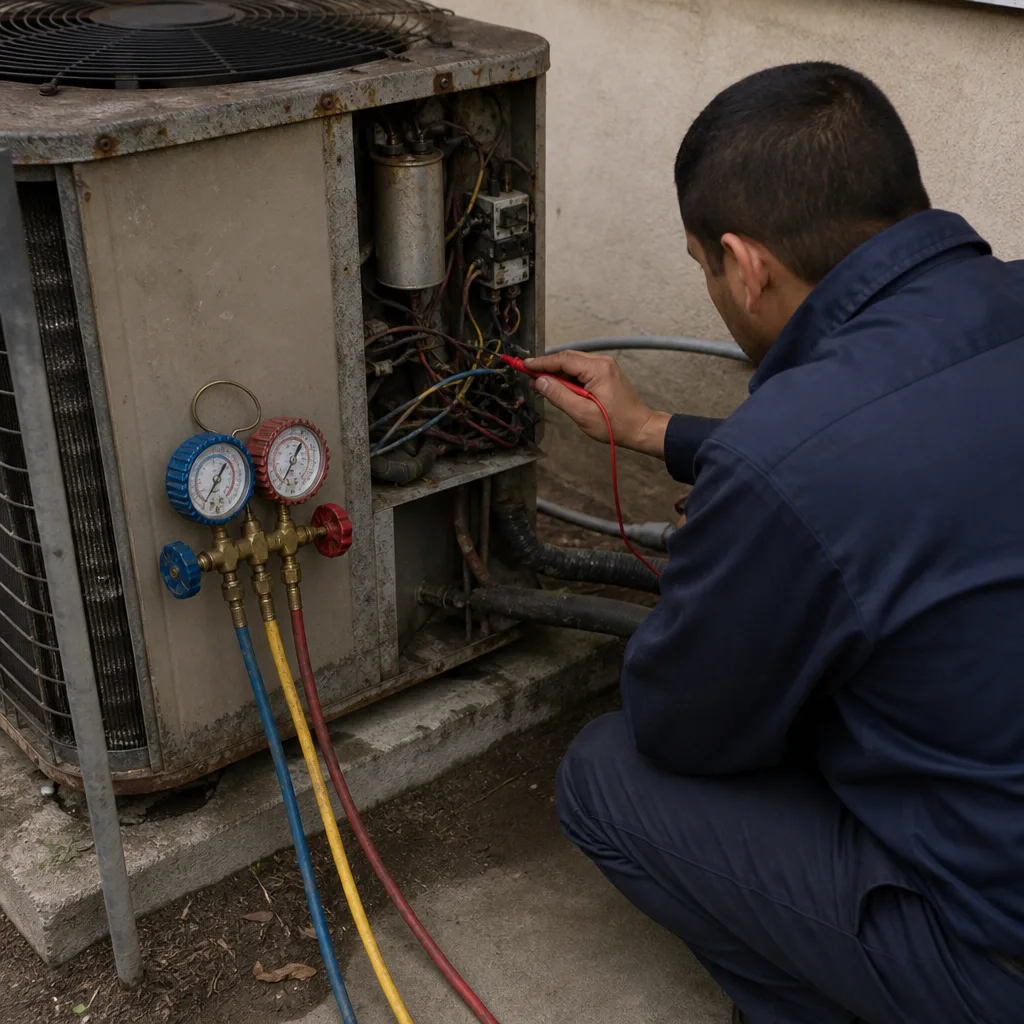 Before
 After
After