
Last updated October 16, 2026
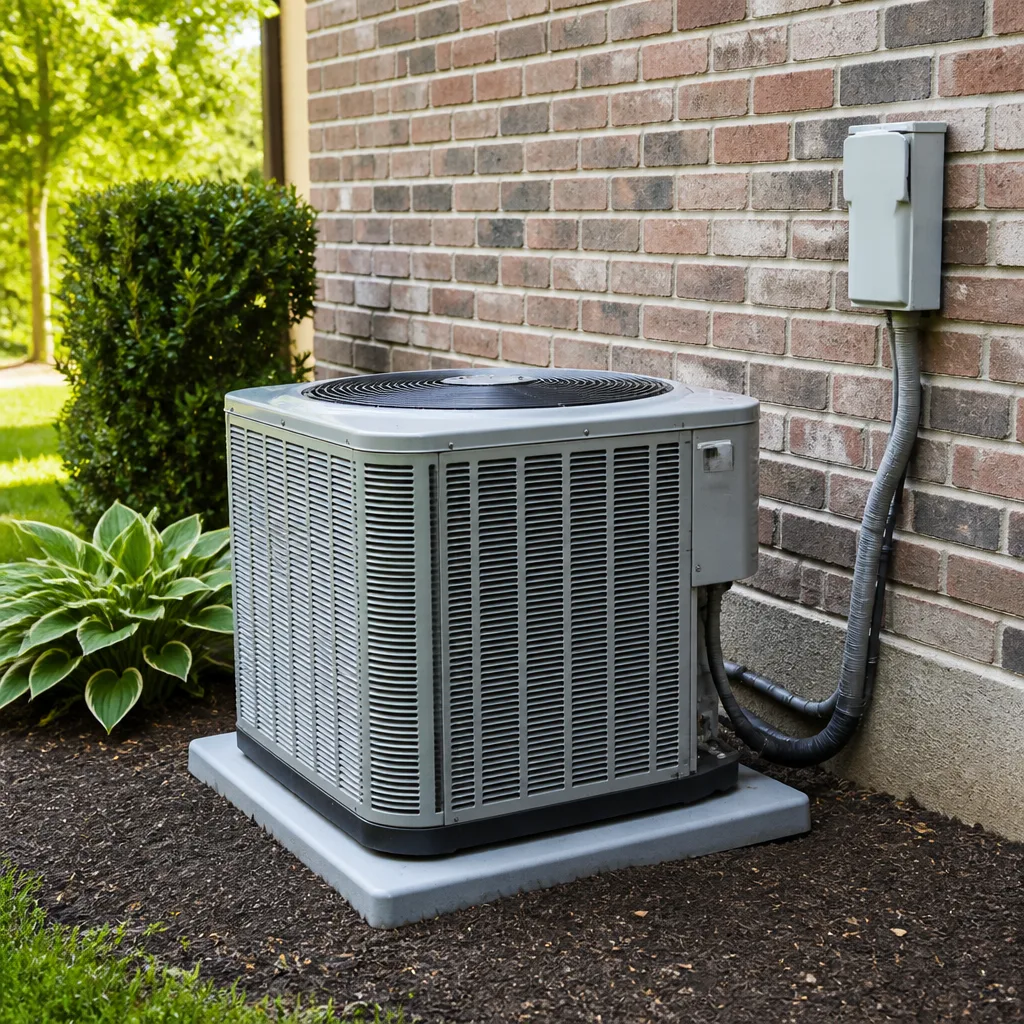 AC repair
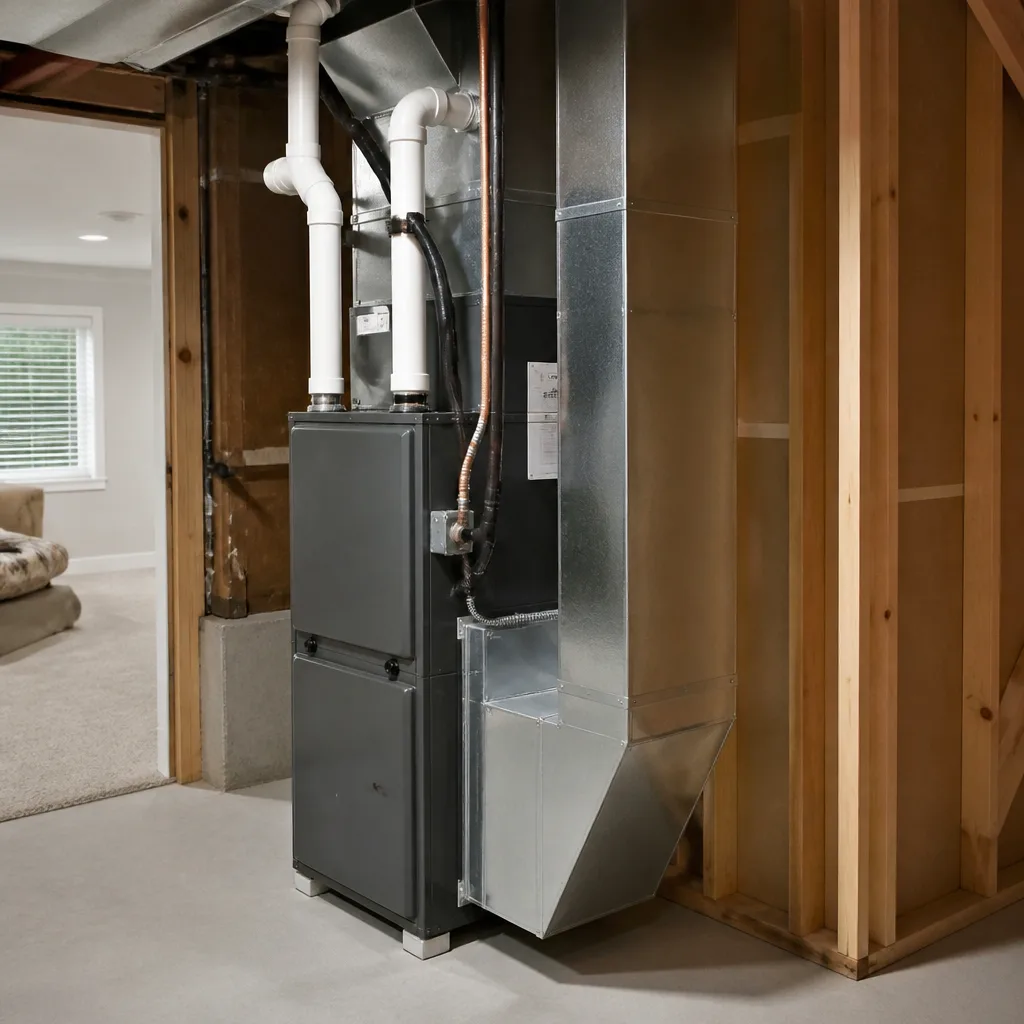 Furnace & heating
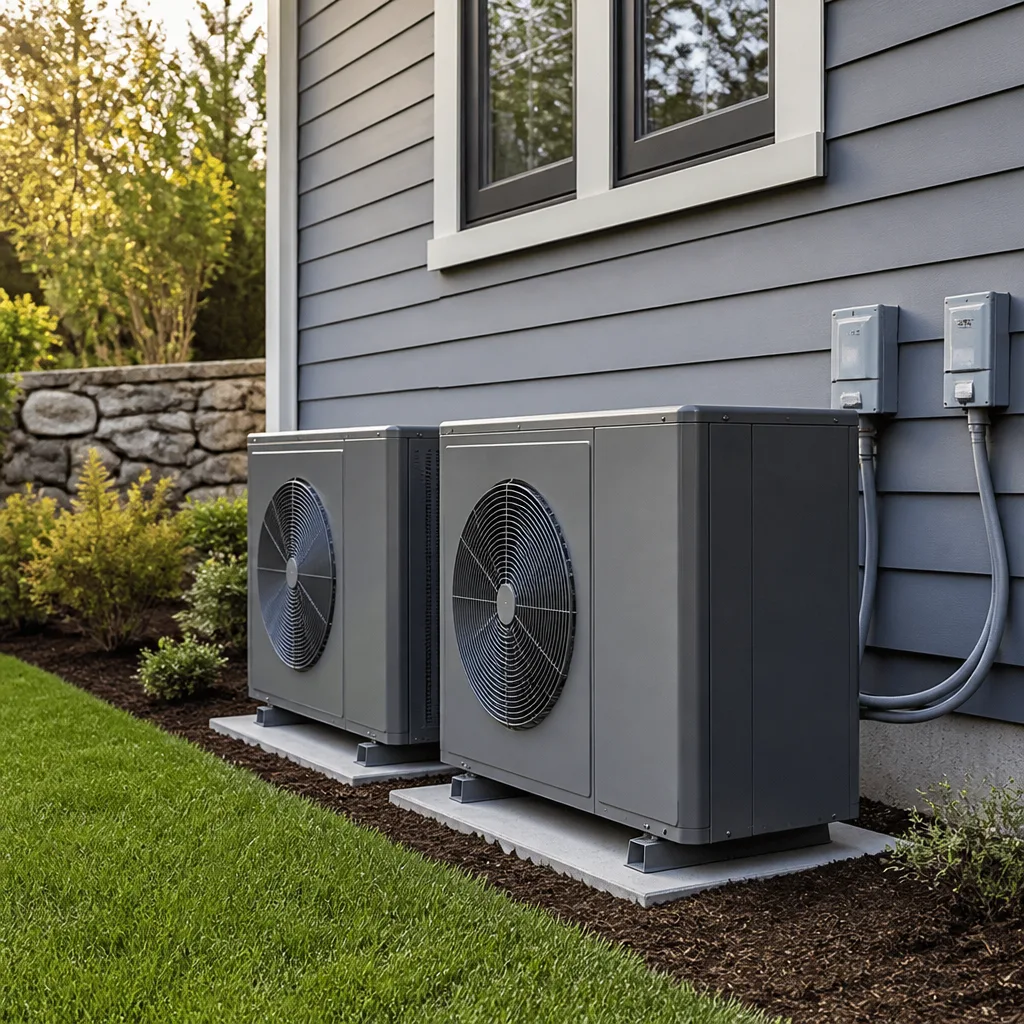 Heat pumps
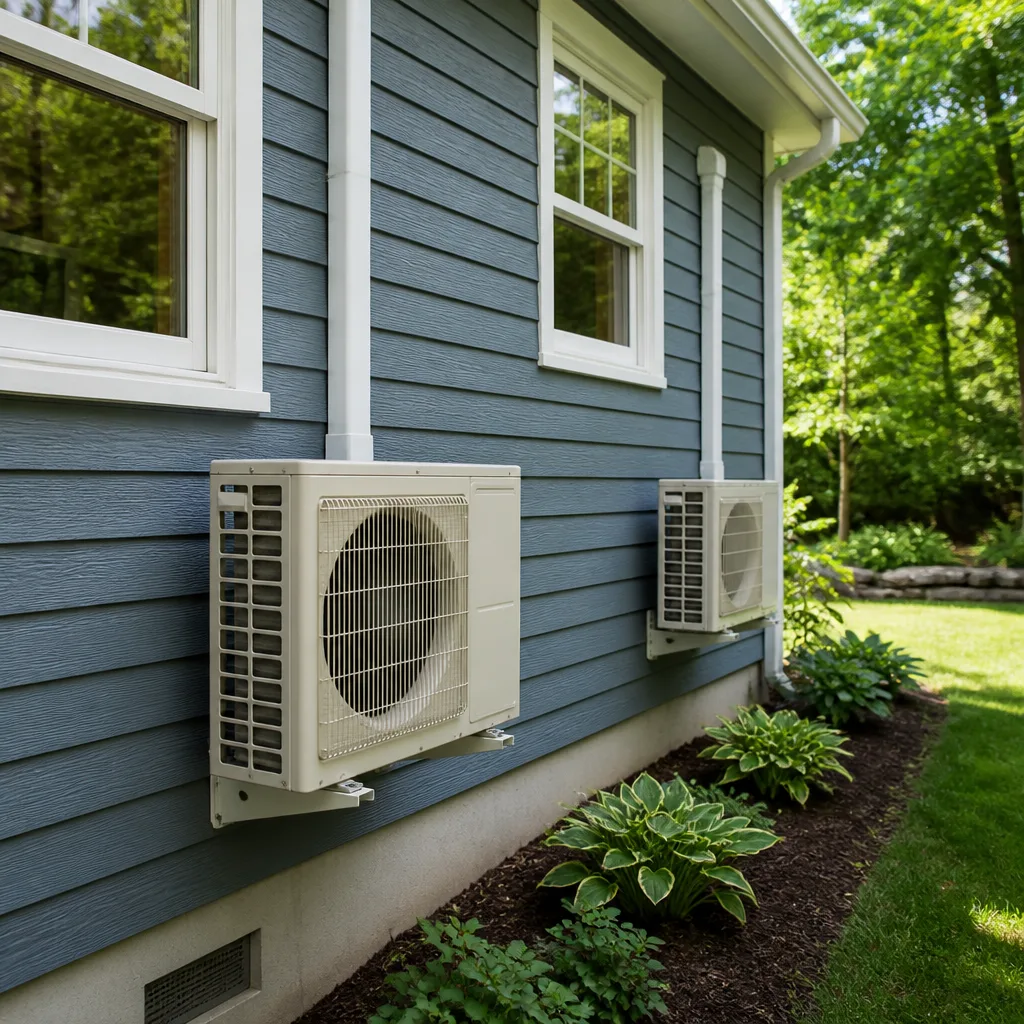 Ductless mini splits
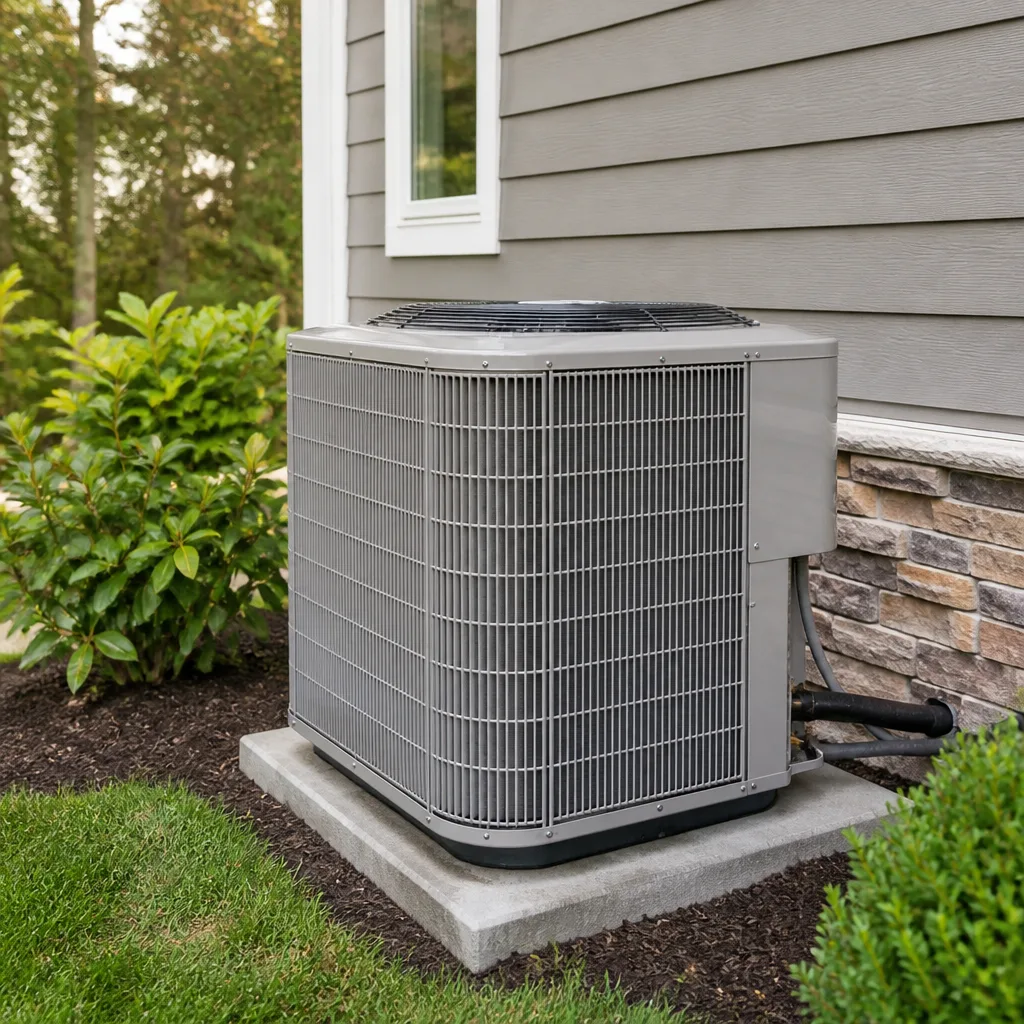 Carrier
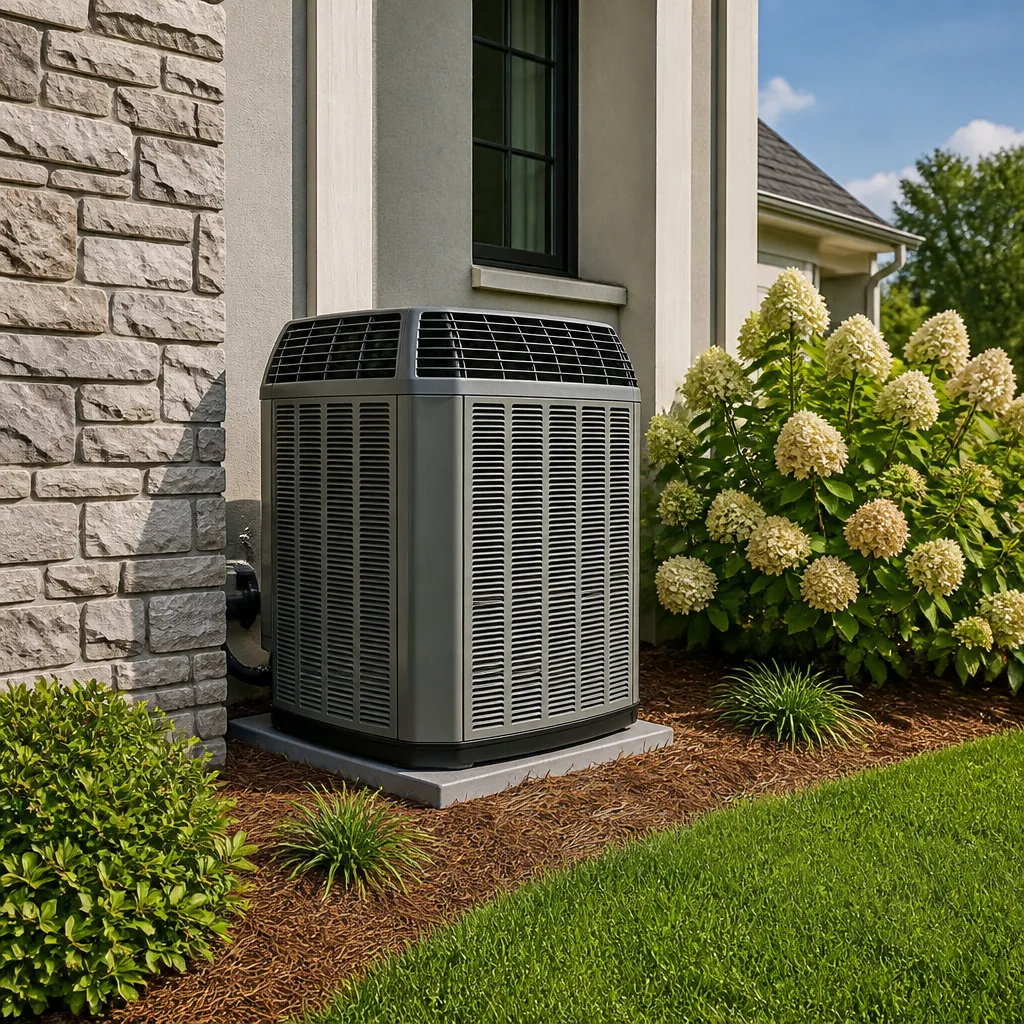 Trane
Trane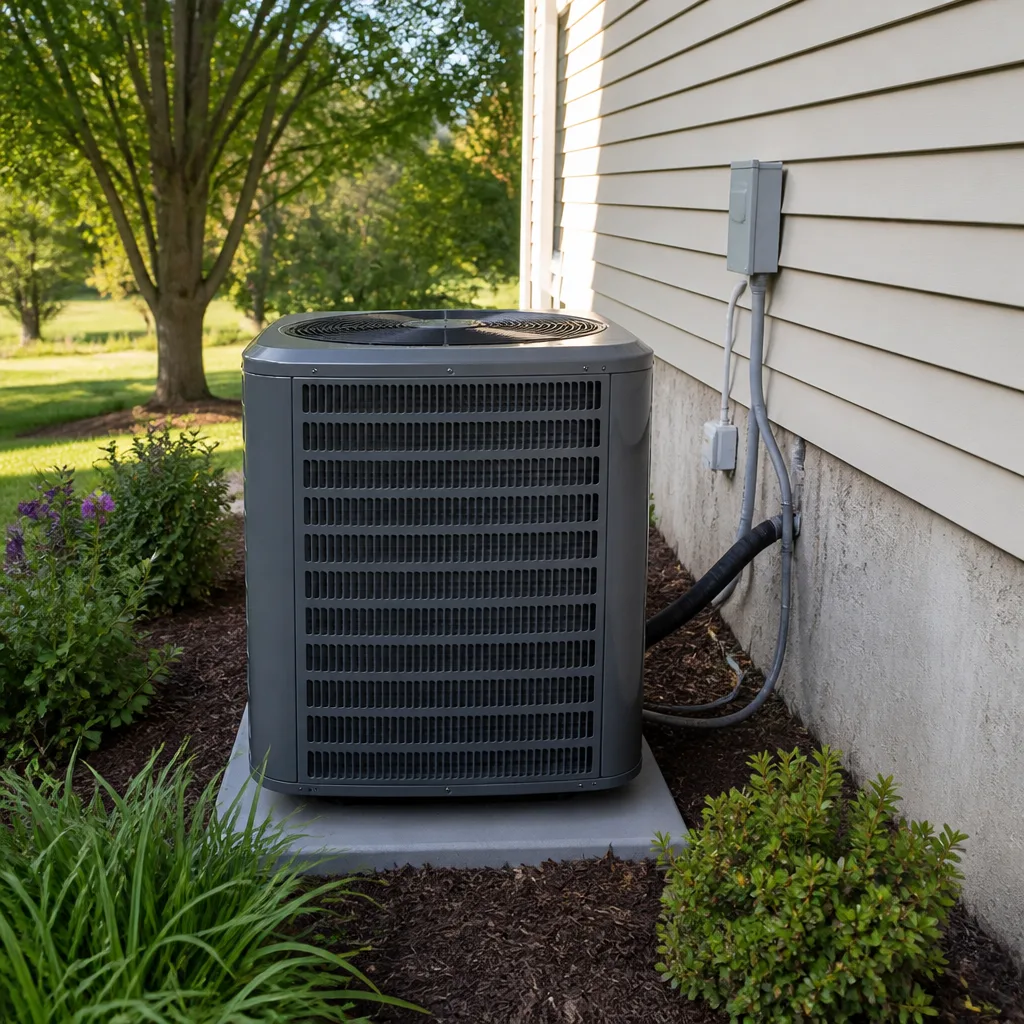 Goodman
Seasonal tune-up and full diagnostic on your Carrier, Trane, or Goodman system - readings shown to you before any repair is proposed
Diagnosis first, numbers second - you approve the repair price before a single part goes in.
Get your free estimateHow to Hire a HVAC Contractor in Los Angeles: A Step-by-Step Guide
California’s Contractors State License Board receives more complaints about HVAC contractors than almost any other construction trade, and Los Angeles County accounts for a disproportionate share of them. The frustrating pattern we hear from homeowners who got burned: “He seemed legitimate.” A truck with a logo, a confident handshake, and a price that sounded reasonable, followed by a repair that failed in three weeks and a phone number that no longer answers. This guide gives you a repeatable vetting sequence that filters out unlicensed operators and bad actors in Los Angeles before any money changes hands, and points you to more guides & resources for protecting your home.
Quick Answer
To hire an HVAC contractor in Los Angeles, verify the C-20 license on the CSLB website, ask five specific questions before the technician enters your home, demand a written price before any work starts, confirm a firm arrival window rather than a four-hour range, and get the guarantee in writing. A legitimate contractor will answer all of these without hesitation. One that won’t is telling you everything you need to know.
Styles & brands we work with
Table of Contents
- Step 1: Verify the C-20 License With CSLB (Under Two Minutes)
- Step 2: The Five Questions to Ask Before the Technician Enters Your Home
- Step 3: Why a Written Price Before Work Starts Matters More Than Anything Else
- Step 4: What a Real Arrival Window Looks Like Versus the Four-Hour Runaround
- Step 5: How to Read a Guarantee in Plain Terms
- Step 6: What Makes the Los Angeles HVAC Market Different
- Step 7: Brand Familiarity and Why It Affects Your Repair Bill
Step 1: Verify the C-20 License With CSLB (Under Two Minutes)
Every legitimate HVAC contractor working in Los Angeles must hold a C-20 Warm-Air Heating, Ventilating and Air-Conditioning Contractor license issued by the California Contractors State License Board. This is not optional, and it is not a technicality. The C-20 classification exists specifically for HVAC work, and any contractor doing heating or cooling installation, replacement, or repair without one is operating illegally in the state of California.
The verification process is faster than ordering a coffee:
- Go to the CSLB website at cslb.ca.gov.
- Click “Check a License” in the top navigation.
- Enter the contractor’s name or license number.
- Look at the license status. It should say “Active” with no suspensions.
- Check the classification. It must say “C-20” specifically, not a general contractor’s B license or an electrical C-10.
- Look at the expiration date. An expired license is the same as no license.
Here is what a red flag looks like in the database: a license status of “Suspended,” “Expired,” or “Revoked” means the contractor cannot legally perform HVAC work in Los Angeles. A B General Building license without the C-20 classification also does not authorize HVAC work. The license must say C-20. In our experience in Los Angeles, the most common excuse is “my partner holds the license” or “I work under someone else’s license.” That is not how the law works. The person whose name is on the contract must hold the active C-20 license.
You should also check the license holder’s name matches the person you are dealing with. If the CSLB database shows one name and the technician or salesperson gives you a different one, ask why. A legitimate company will explain the relationship clearly. A company that gets defensive is not one you want inside your home.
Step 2: The Five Questions to Ask Before the Technician Enters Your Home
Once you have confirmed the license is active and the classification is correct, the next filter is a short conversation before you schedule anything. These five questions are not tricks. They are the minimum a professional should be able to answer clearly and without hesitation. The wrong answers are listed below each question, because bad contractors reliably give the same ones.
Question 1: “Will you give me a written price before any work begins?”
Correct answer: Yes, and here is exactly what it will include: parts, labor, and any permits.
Wrong answer: “We’ll see once we get in there” or “It depends.” Yes, some jobs reveal complications once the system is opened up. A professional explains what those complications might be and how the price could change, before the work starts. A professional does not ask you to authorize an open check.
Question 2: “What is your arrival window, and what happens if you miss it?”
Correct answer: A specific window like “between 9 and 11 AM,” with a call when the technician is 30 minutes out.
Wrong answer: “Sometime between 8 and 5.” That is not a window. That is a day. A four-hour or eight-hour range tells you the company does not value your time enough to schedule properly.
Question 3: “Is your guarantee written down, and what exactly does it cover?”
Correct answer: “Yes, here is what it says.” A written guarantee that names the repair, the date, the parts covered, and the length of coverage.
Wrong answer: “We guarantee our work” said verbally with nothing in writing. A verbal guarantee is not a guarantee. It is a promise that evaporates the moment something goes wrong.
Question 4: “Are your technicians background checked?”
Correct answer: Yes, every technician has passed a background check and arrives in uniform with company identification.
Wrong answer: A pause, a vague “we only hire good people,” or deflection. You are letting a stranger into your home in Los Angeles. You have a right to know who they are.
Question 5: “Which brands of equipment are your technicians trained to work on?”
Correct answer: A list of specific manufacturers, like Carrier, Trane, Lennox, Goodman, Rheem, York, Daikin, Bryant, and American Standard.
Wrong answer: “All of them” without specifics, or “we work on everything.” A technician who is genuinely trained on multiple brands will know them by name. A technician who gives you a vague answer may be learning on your system at your expense.
If a contractor struggles with two or more of these questions, end the conversation politely and move on. Los Angeles has thousands of HVAC contractors. You do not need to gamble on one that cannot answer basic questions about price, scheduling, guarantees, and training.
Step 3: Why a Written Price Before Work Starts Matters More Than Anything Else
The single most common complaint about HVAC contractors in Los Angeles, and in California generally, is the price that changed after the work was underway. The technician quotes one number over the phone. The number grows once the system is opened up. The homeowner, now without cooling in August or heat in January, feels they have no choice but to pay. This pattern is so consistent that it has a name in the industry: the door price. And it is the clearest line between a professional operation and a predatory one.
A written price before work begins changes the entire dynamic. It means the contractor has looked at the system, diagnosed the problem, and is confident enough in their diagnosis to put a number on paper. It means the parts were priced before the tool bag came out of the truck. It means there is a document you can hold onto if the final bill does not match.
At Cold Harbour Heating and Air Los Angeles, this is not a policy applied case by case. It is one of the core planks of the Kingswell Way, the written standards that govern how we operate. The Kingswell Way has five commitments: say the price before the work, show up in the window given, leave the place cleaner than found, put the guarantee in writing, and come back if it fails. The written price is the first of those commitments, because without it, none of the others mean much.
Our technicians hand you a written price before a single tool comes out. It includes parts, labor, and any applicable permit fees. If the diagnosis changes once the system is opened up, the technician explains the change and gets your approval before any additional work is done. The price you agree to is the price you pay. That is how it should work, and if a contractor will not agree to it in writing, that is your signal to find one who will.
Step 4: What a Real Arrival Window Looks Like Versus the Four-Hour Runaround
The industry standard for HVAC appointment scheduling is a four-hour window. “We’ll be there between 12 and 4,” the dispatcher says. Then 4 PM arrives, and no one has called. You call the office. “He’s running behind, he’ll be there by 6.” Six becomes 7:30. You have now spent an entire afternoon waiting for a technician who may or may not show up.
This is not an accident. The four-hour window exists to protect the contractor, not the homeowner. It gives a company with too many calls and too few technicians the flexibility to overbook and hope no one complains. In Los Angeles, where a service call can mean driving from the Valley to the Westside and back, four-hour windows are the norm. But they do not have to be.
A legitimate arrival window is specific and firm. It sounds like “the technician will arrive between 9 and 11 AM.” A company that commits to a two-hour window has actually scheduled the technician, factored in drive time, and built in enough buffer to handle traffic on the 405 or the 101. They will also call when the technician is 30 minutes out, so you are not standing at the window wondering.
The difference is not cosmetic. A company that gives you a firm window is respecting your time. A company that gives you a four-hour range is treating your schedule as irrelevant. The Kingswell Way, the standard we operate by at Cold Harbour, includes showing up in the window given as a written commitment, not a hope. When you call to schedule with us, you get a specific window, and a phone call when the technician is on the way. If something goes wrong and the technician is delayed, you hear about it as soon as we do, not after you call to ask where they are.
Step 5: How to Read a Guarantee in Plain Terms
“Satisfaction guaranteed” is one of the most common phrases in home services, and one of the least meaningful. What does it actually mean? In legal terms, almost nothing. It is a marketing phrase with no defined timeframe, no defined remedy, and no enforcement mechanism. If you are dissatisfied, what happens? The contractor decides what “satisfaction” means, on their schedule, at their discretion.
A real guarantee is specific. It names the work that was done, the date it was done, the parts that were installed, and the period of time during which the contractor will return to fix it without additional charge. It is written down, and you receive a copy before the technician leaves your home.
Here is what our guarantee looks like in practice: every repair from Cold Harbour Heating and Air comes with the 365-Day Done Right Promise. It is a written guarantee, valid for a full year from the date of the repair. If the repair fails within that 365-day period, we come back and correct the work at no charge. No argument, no re-diagnosis fee, no second invoice. The guarantee is on paper, and it travels with the invoice.
When a contractor offers a verbal “we’ll take care of you” or a vague “satisfaction guaranteed,” ask a simple follow-up: “Can you write that down with a specific timeframe?” A professional will say yes. A contractor who hedges is telling you the guarantee is not worth the paper it is not written on.
Step 6: What Makes the Los Angeles HVAC Market Different
Los Angeles is unlike any other HVAC market in the country, and the differences affect how you should approach hiring. First, the climate. The city spans multiple microclimates, from the coastal fog of Santa Monica and Venice, where AC systems run for three months a year, to the San Fernando Valley, where summer temperatures regularly exceed 100 degrees and cooling is a health necessity, not a comfort feature. A system in Woodland Hills does far more work than a system in Playa del Rey, and that changes the failure profile. In the Valley, we routinely see compressor failures and capacitor burnouts that coastal homes never experience, simply because the equipment runs harder for more of the year.
Second, the permit landscape. Los Angeles County and the City of Los Angeles have specific mechanical permit requirements for HVAC work, particularly for system replacements and new installations, so review HVAC Permits, Codes & Inspections in CA: What You Need to Know before you start. A legitimate contractor pulls the permit. An unlicensed operator skips it, which saves a few hundred dollars and puts the homeowner in legal and insurance limbo if something goes wrong. When a contractor tells you a permit is not needed, verify that with the Los Angeles Department of Building and Safety directly. Do not take the contractor’s word for it.
Third, the sheer volume of work. Los Angeles is a massive market with millions of homes, and high call volume attracts operators who see the trades as quick money rather than a career. The loose enforcement on unlicensed contracting makes it worse. The CSLB investigates complaints, but they are understaffed relative to the size of the market. That means the burden of vetting falls on the homeowner, which is exactly why the steps in this guide matter.
Step 7: Brand Familiarity and Why It Affects Your Repair Bill
Your HVAC system has a name on it, and that name matters when it comes to repair. A technician who works on Carrier systems every week knows the failure patterns, the common part numbers, and the diagnostic quirks. A technician who has never opened your brand of furnace or AC will spend more time diagnosing, which becomes your bill if the company charges by the hour.
Ask any contractor you are considering which brands their technicians are trained to service. A real answer includes specific manufacturers. Our technicians at Cold Harbour Heating and Air are trained on nine major residential HVAC brands: Carrier, Trane, Lennox, Goodman, Rheem, York, Daikin, Bryant, and American Standard. That coverage matters because Los Angeles homes are a patchwork. One neighborhood full of 1980s tract homes might be mostly Rheem or Goodman. A street of new construction might be Trane or Carrier. A technician who knows one brand well is fine if that is your brand. A technician who knows nine is better, because they will not be learning on the job at your expense.
If you have a newer system, especially one still under manufacturer warranty, ask whether the contractor is authorized to perform warranty work. Unauthorized repairs can void the warranty, and an unlicensed contractor who touches a warranted system is the fastest way to lose that coverage entirely.
Common Mistakes to Avoid
- Hiring based on the lowest bid. The lowest bid in Los Angeles usually reflects missing permits, skipped background checks, or a guarantee that does not exist. You are not saving money; you are deferring the cost to the next repair.
- Not checking the license until after the work is done. Once the system is installed or repaired and the check has cleared, finding out the contractor was unlicensed leaves you with no CSLB recourse. Check first, pay later.
- Accepting a verbal quote. A contractor who will not put the price in writing is one who plans to change it. Always get the number on paper before work begins.
- Assuming a big brand name means a good contractor. Nationally advertised HVAC brands are equipment manufacturers, not service companies. The technician in your home is from a local contractor, and that contractor’s license, guarantee, and reputation are what protect you.
- Ignoring the permit question. In Los Angeles, a system replacement without a permit can cause problems when you sell the home, file an insurance claim, or need city inspection for any other work. Ask about permits explicitly.
- Skipping the guarantee conversation. “Do you guarantee your work?” is the wrong question because everyone says yes. The right question is “Can I see the written guarantee before I pay?” A professional hands it over without hesitation.
- Rushing the decision during an emergency. When the AC dies during a Valley heatwave, the instinct is to take the first available technician. A day of research, even during a heatwave, is cheaper than a bad repair and a voided warranty.
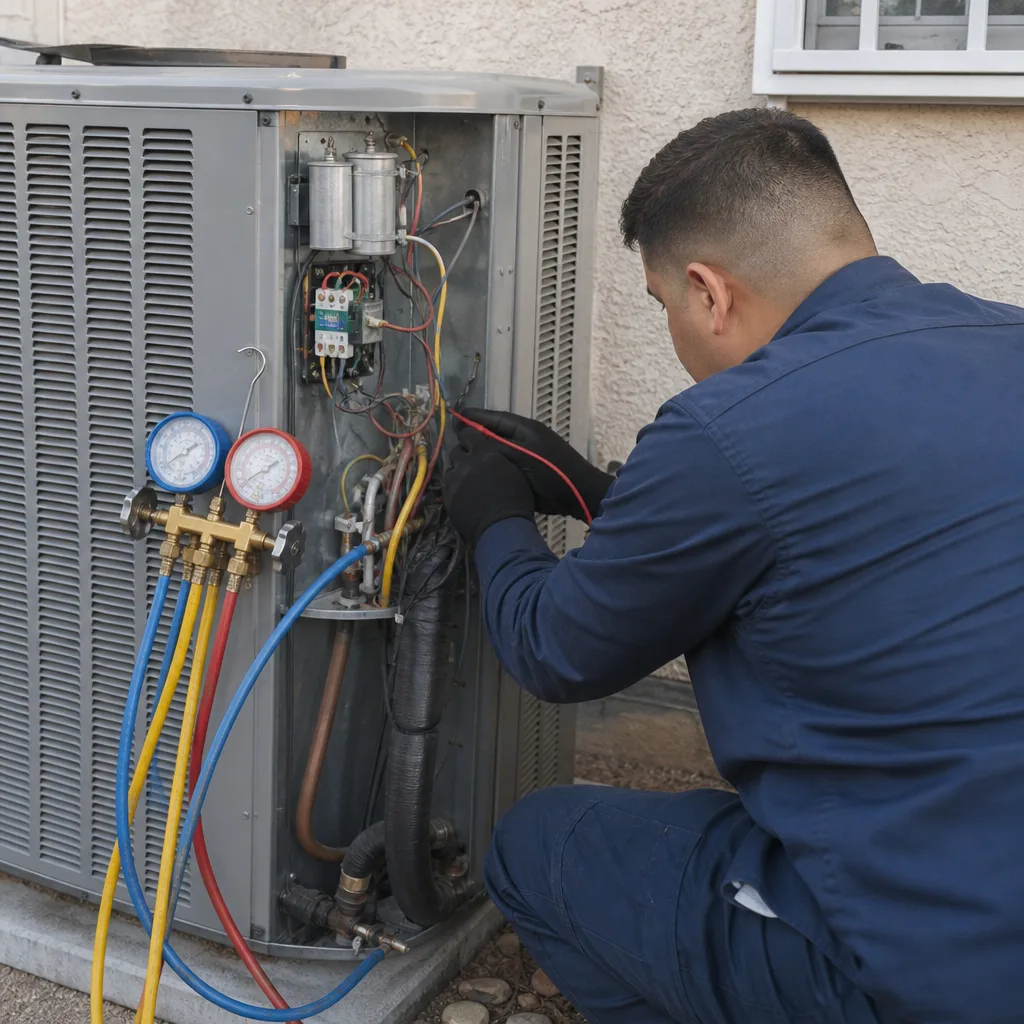
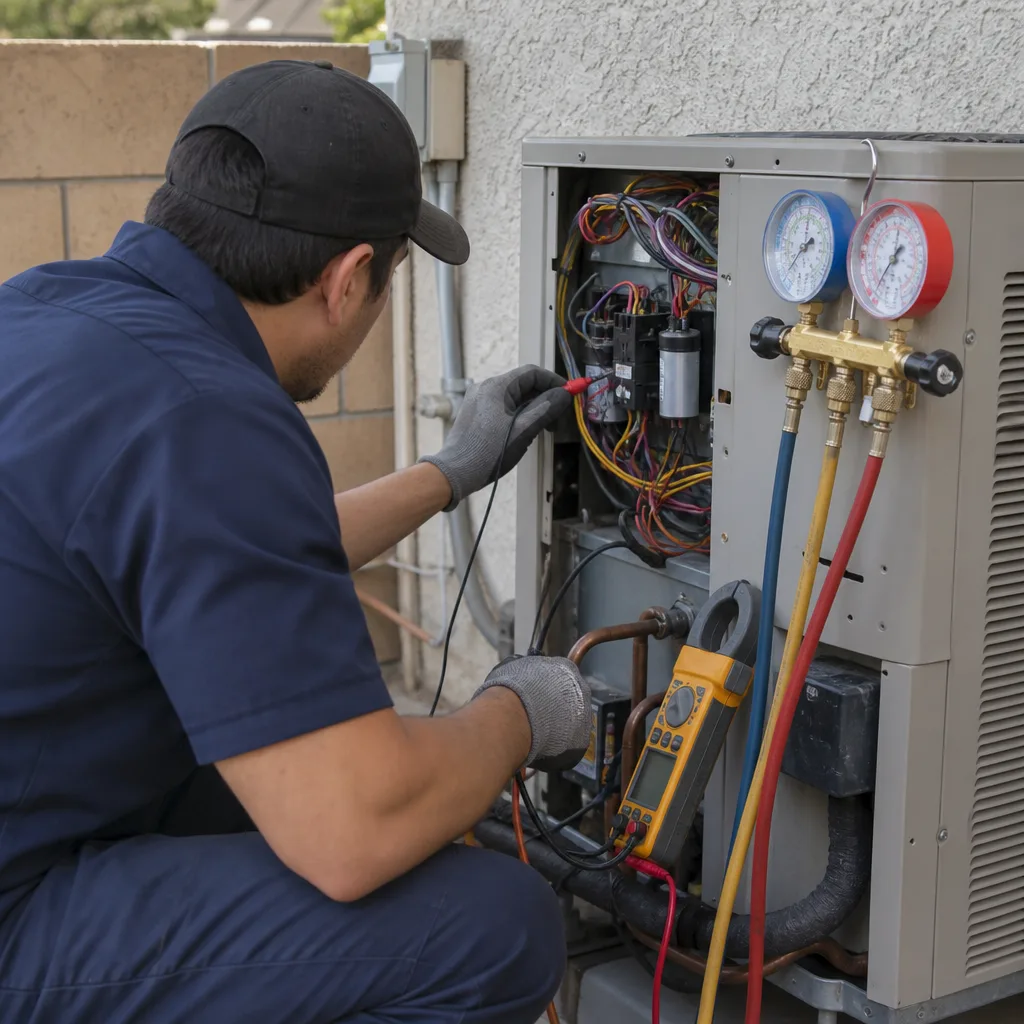
See the difference
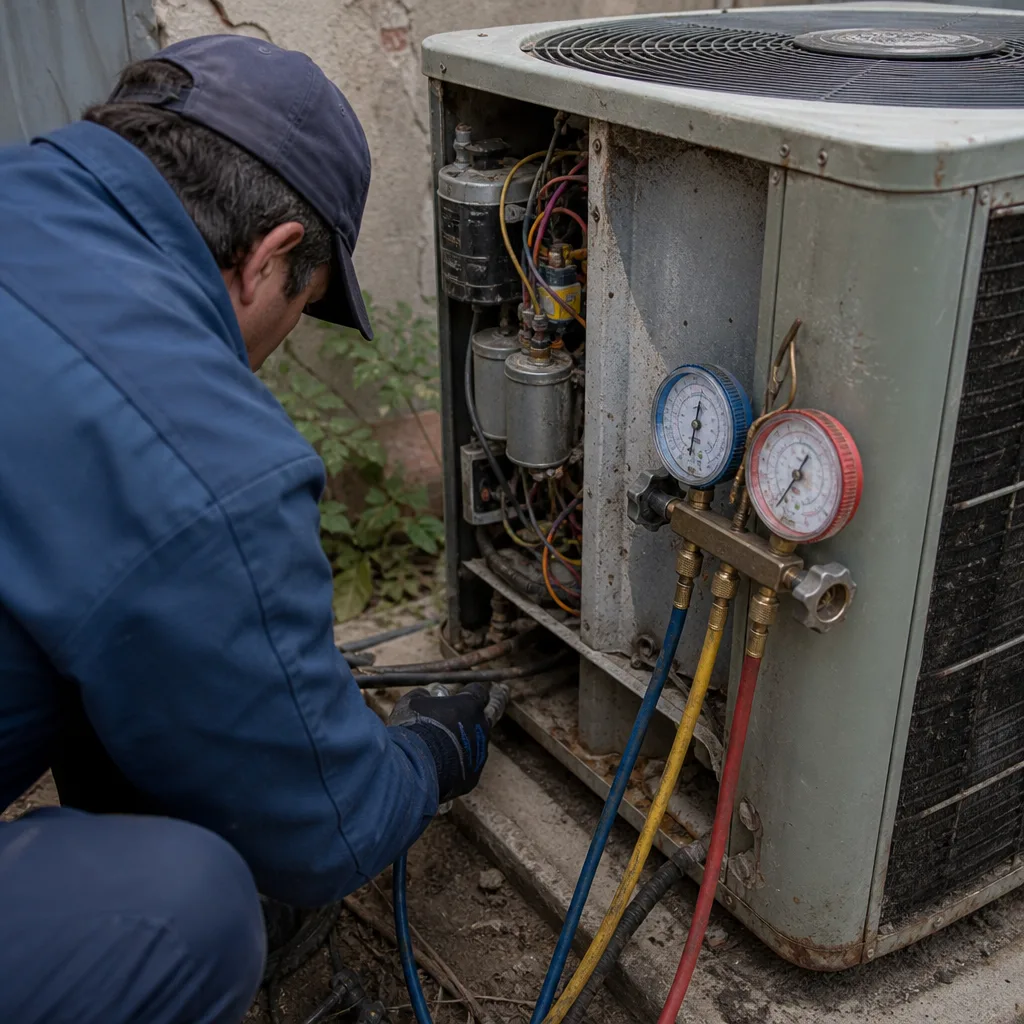 Before
 After
After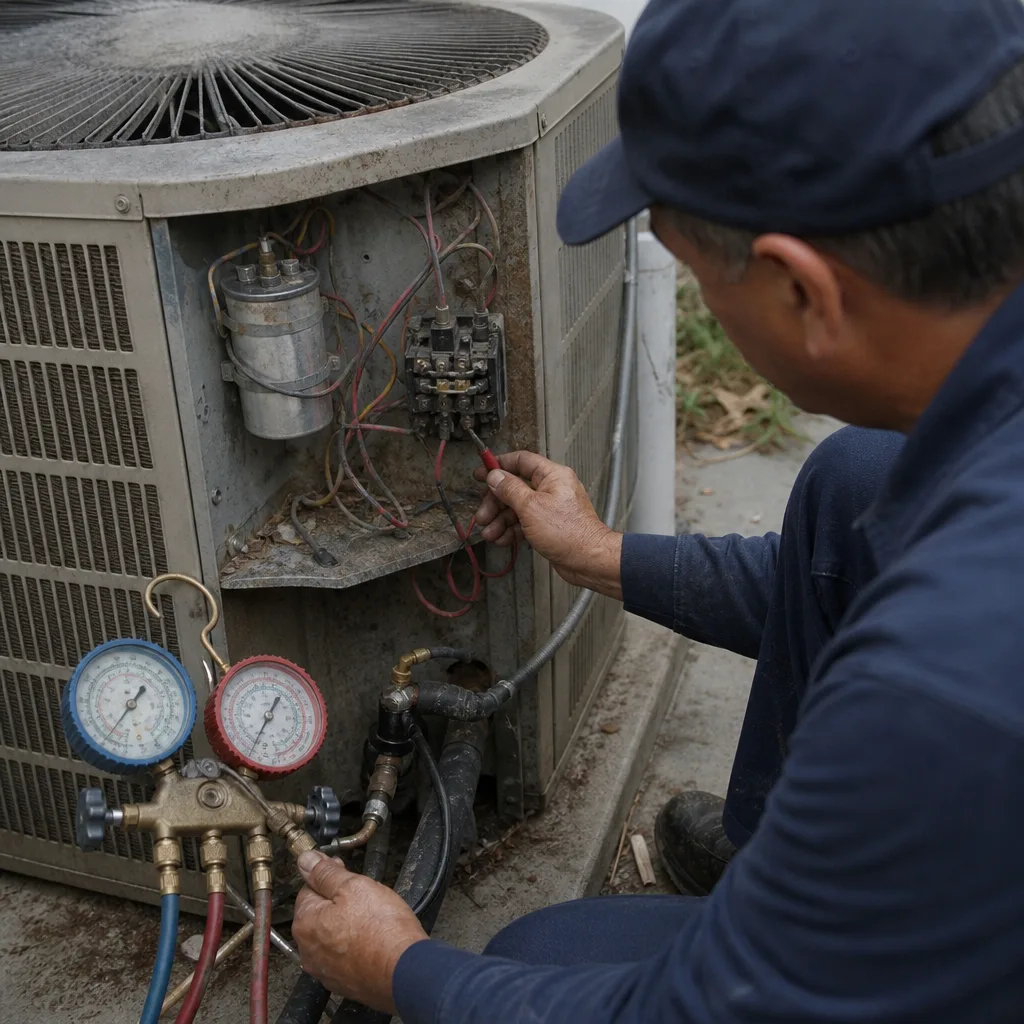 Before
 After
After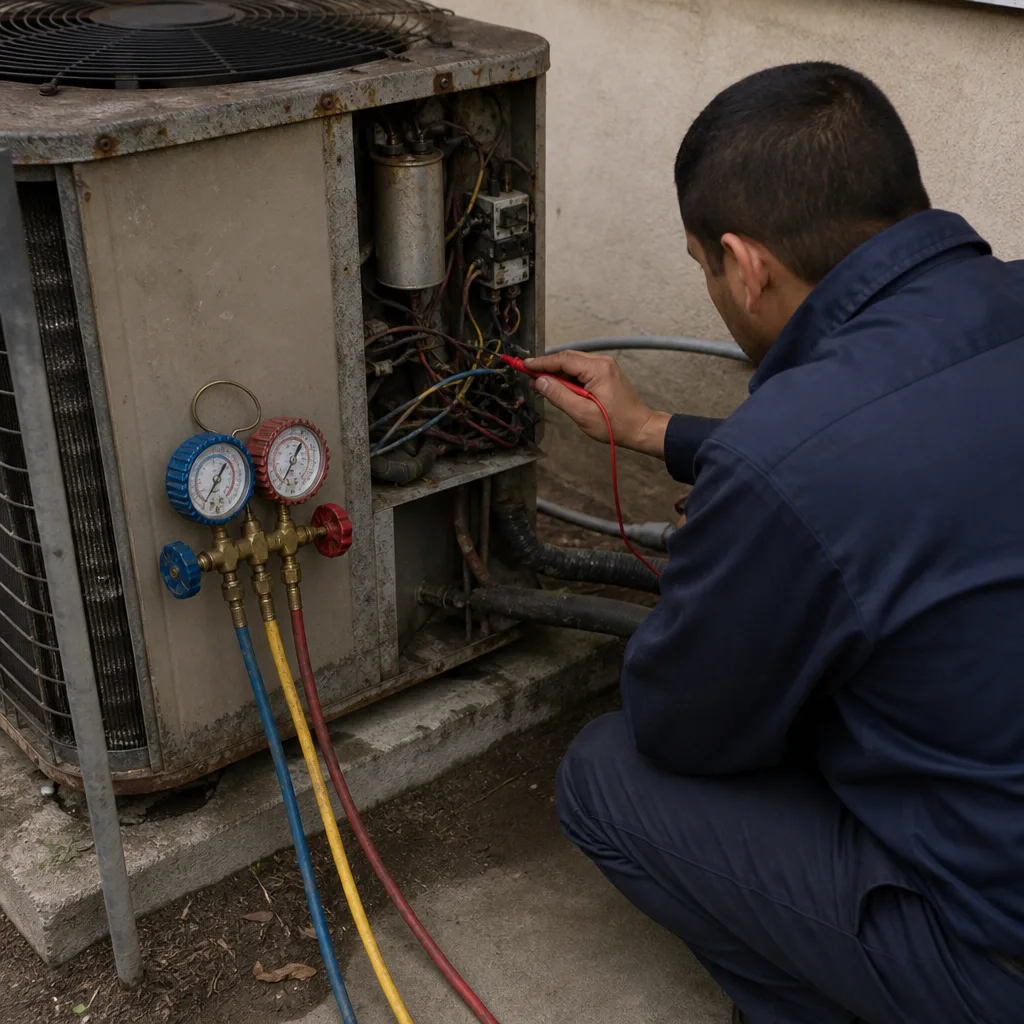 Before
 After
AfterWhen to Call a Professional
Some HVAC issues are safe to troubleshoot with a quick look at the thermostat and circuit breaker. Others are not, and knowing the difference is covered in our HVAC Warning Signs: A Los Angeles Homeowner’s Reference Guide. If you hear a grinding or screeching noise from the outdoor unit, turn the system off and call a professional; running it could turn a small bearing failure into a full compressor replacement. If you smell gas near the furnace, leave the house and call both your utility company and a licensed HVAC contractor immediately; natural gas leaks are not a DIY problem. If the system is blowing warm air while the outdoor unit is frozen over, shut it down and call for service; defrosting it with a hair dryer or hot water risks cracking the coil. If you have high-voltage electrical symptoms, tripped breakers that will not reset, or burn marks near the furnace, do not touch anything; electricity at residential HVAC voltage can cause serious injury. Cold Harbour Heating and Air Los Angeles offers free estimates in Los Angeles. Call (213) 531-5904 and a live person answers, day or night.
Frequently Asked Questions
Go to cslb.ca.gov, click “Check a License,” and search by name or license number. The license should show an “Active” status and the classification C-20 Warm-Air Heating, Ventilating and Air-Conditioning. Anything else, including a B General Building license, does not authorize HVAC work. The check takes under two minutes and is free.
Most common repairs in the Los Angeles market fall into predictable ranges. A capacitor replacement typically runs $150-$350. A contactor replacement is usually $175-$400. A refrigerant recharge runs $200-$600 depending on the refrigerant type and amount needed. A blower motor runs $350-$900. A compressor replacement ranges from $1,500 to $3,500 depending on the system size and brand. These are the prices for work done by licensed contractors with written guarantees; unlicensed operators may quote lower numbers that reflect missing permits, missing insurance, and missing recourse. Call (213) 531-5904 for an exact written quote before any work begins.
The honest answer depends on the age of the system and the cost of the repair. A common rule of thumb: if the repair cost multiplied by the system’s age exceeds the cost of a new system, replacement makes more sense. A $2,000 compressor repair on a 15-year-old AC unit is usually money poorly spent. A $300 capacitor replacement on a 7-year-old system is a straightforward repair. A licensed contractor in Los Angeles should walk you through the numbers without pushing you toward one option or the other.
It is common, but it is not acceptable. A professional contractor commits to a specific arrival window, typically two hours, and calls when the technician is 30 minutes out. A four-hour range means the company has not actually scheduled your job with any precision; they are treating your day as disposable. Ask about the arrival window before you book, and hold the contractor to it.
C-20 is the California specialty contractor license classification for Warm-Air Heating, Ventilating and Air-Conditioning. It authorizes the holder to install, repair, and replace residential HVAC systems. A contractor without an active C-20 license is operating illegally in Los Angeles, and any work they perform can void manufacturer warranties and create insurance complications. Always verify the C-20 before hiring.
In most cases, yes. The City of Los Angeles Department of Building and Safety requires mechanical permits for HVAC system replacements and new installations. A legitimate contractor pulls the permit as part of the job. If a contractor tells you no permit is needed, verify that claim directly with LADBS before proceeding. Call (213) 531-5904 if you want an exact quote for AC installation with permits handled.
Every repair from Cold Harbour Heating and Air includes the 365-Day Done Right Promise, a written guarantee valid for one full year from the repair date. If the repair fails within that year, we return and correct the work at no charge. The guarantee is handed to you in writing before the technician leaves, not promised verbally.
The Bottom Line
Hiring an HVAC contractor in Los Angeles does not have to be a gamble. The vetting sequence is simple: verify the C-20 license on the CSLB website, ask the five questions, demand a written price before work starts, confirm a firm arrival window, and get the guarantee in writing with a specific timeframe. A contractor who passes all five filters is one you can trust with your home. A contractor who fails any one of them is one you should thank for their time and send on their way. For AC repair in Los Angeles, furnace repair, or AC installation, the same standards apply. If you want a written price, a firm window, and a 365-day written guarantee on every repair, call (213) 531-5904. A live person answers, any hour, any day.
Return to the Cold Harbour Heating and Air Los Angeles home page for more on how we work.
Written by Victor Mancini, Owner at Cold Harbour Heating and Air Los Angeles, serving Los Angeles since 2003.