
Last updated October 16, 2026
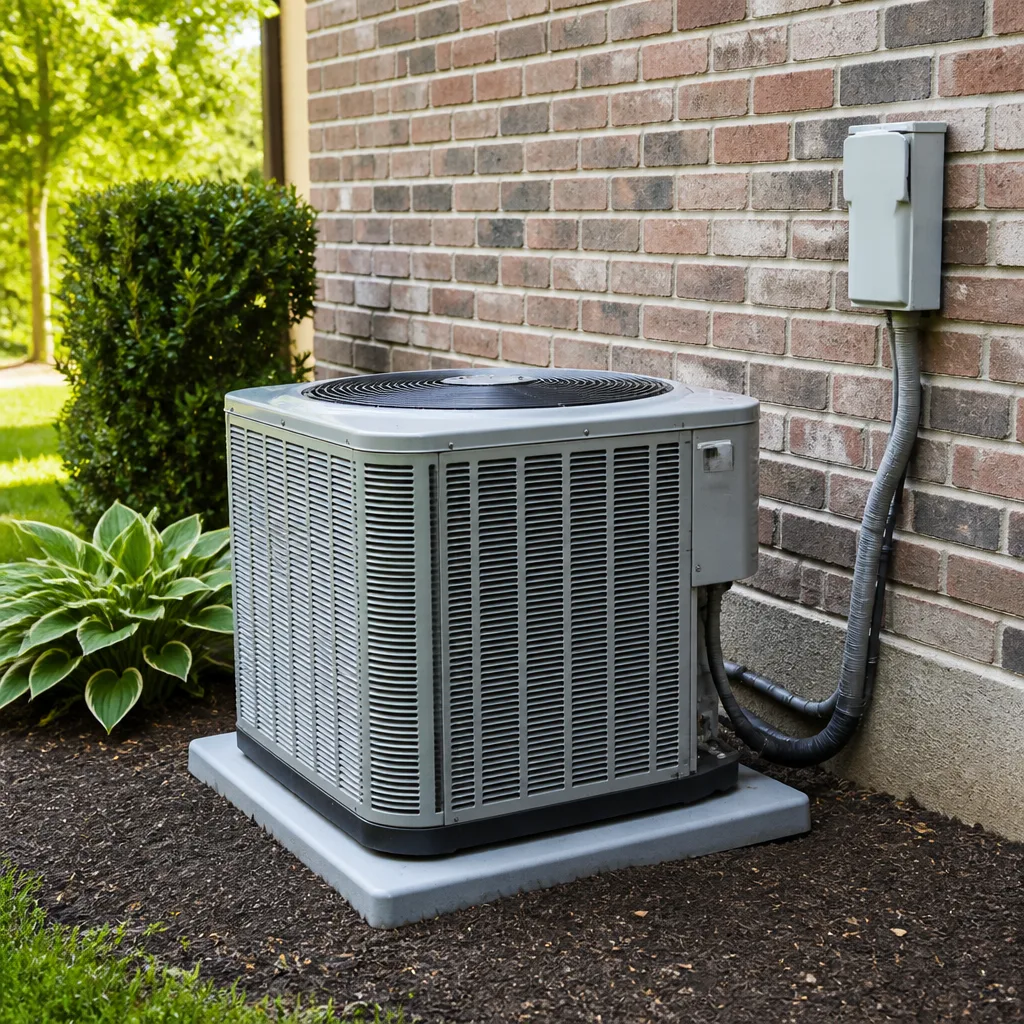 AC repair
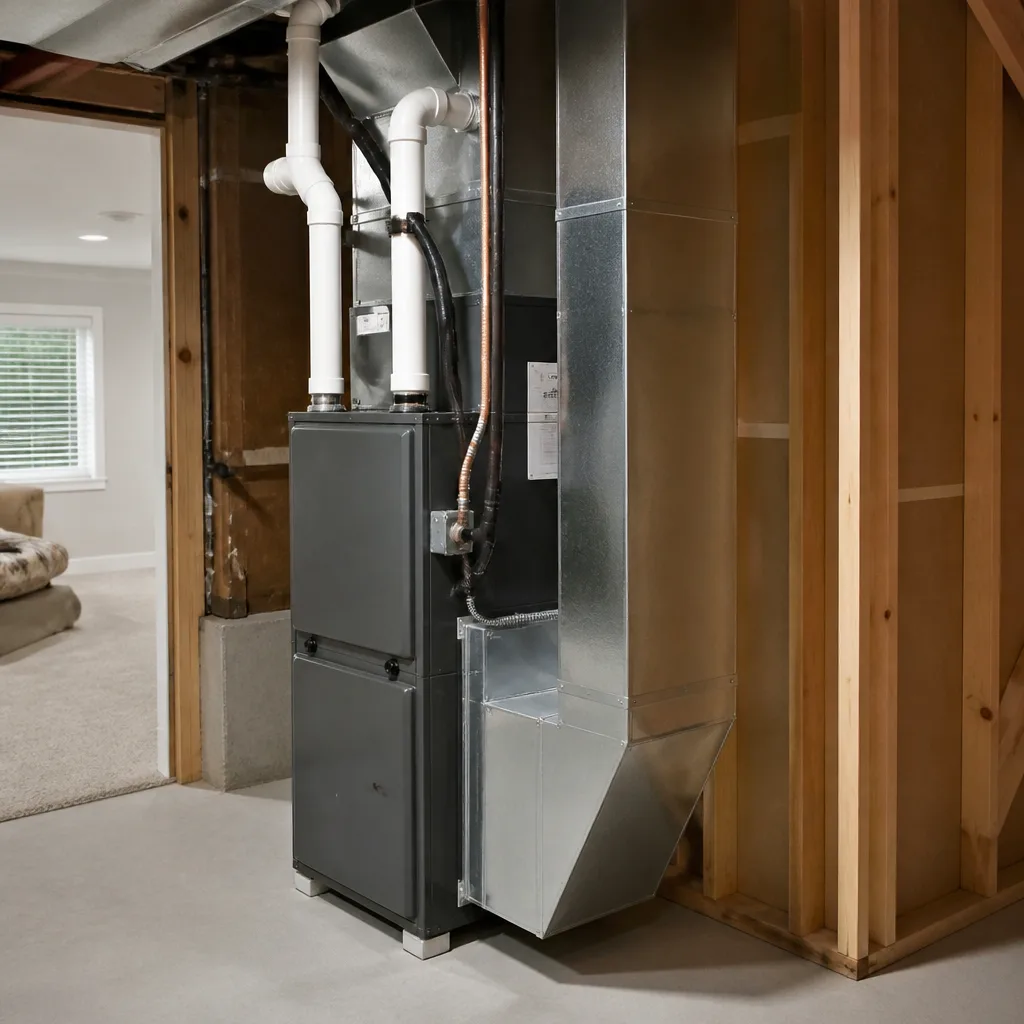 Furnace & heating
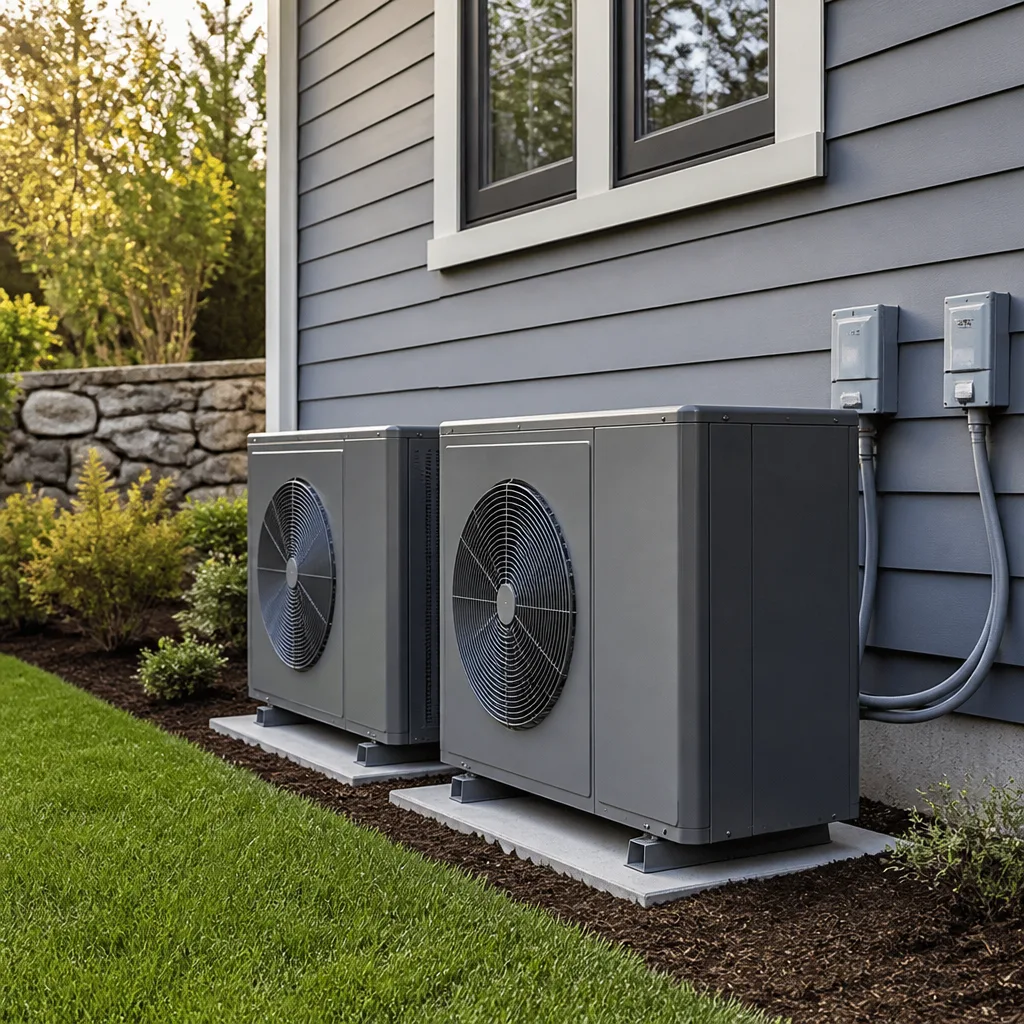 Heat pumps
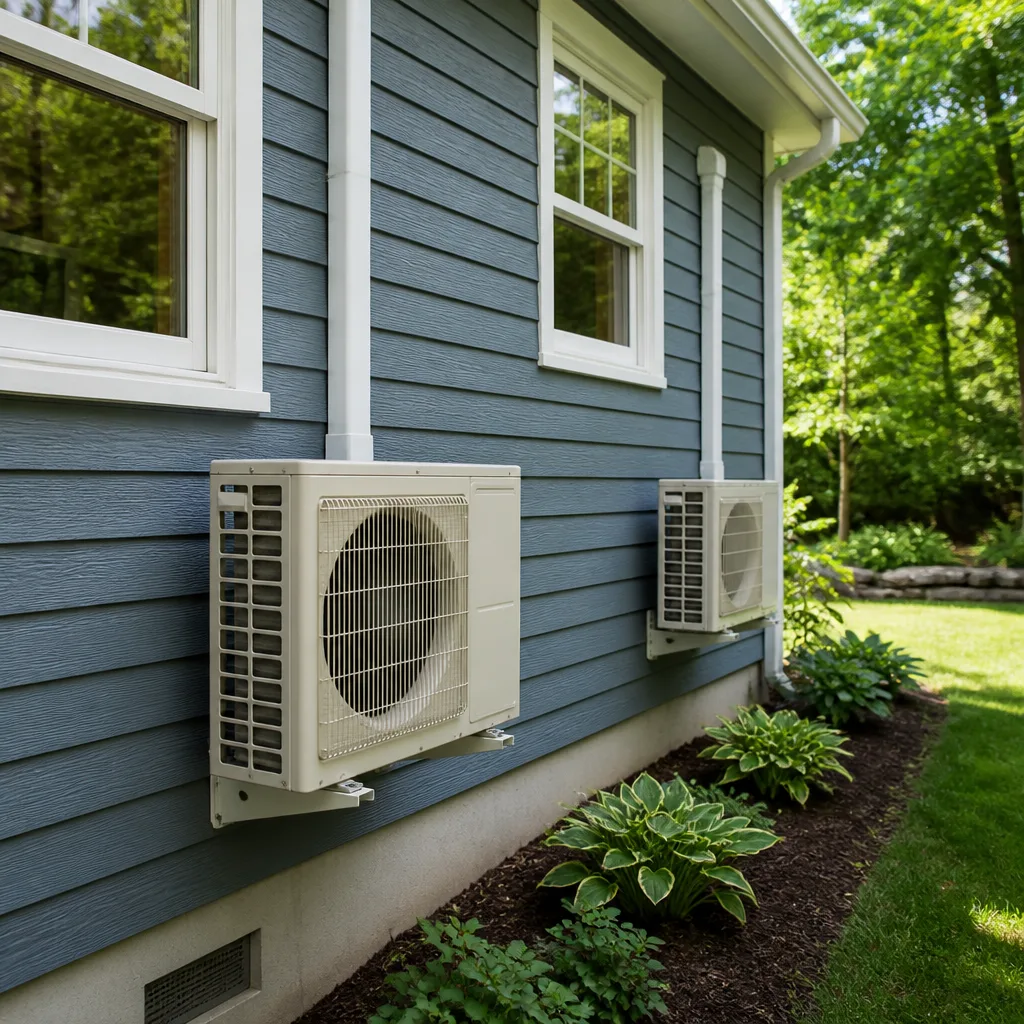 Ductless mini splits
 Carrier
 Trane
Trane Goodman
Seasonal tune-up and full diagnostic on your Carrier, Trane, or Goodman system - readings shown to you before any repair is proposed
Diagnosis first, numbers second - you approve the repair price before a single part goes in.
Get your free estimateHVAC Permits, Codes & Inspections in CA: What You Need to Know
A real estate attorney in Los Angeles will tell you the same thing: unpermitted HVAC work is one of the top three disclosure headaches in Southern California home sales. And the seller, not the contractor who cut corners, is the one who pays for it. Insurance carriers are quietly adding exclusions for claims tied to unpermitted mechanical work, and title companies are starting to flag open permits during escrow. This guide explains how California and Los Angeles County HVAC permits actually work, which jobs need them, what inspectors look for, and how to fix unpermitted work before it becomes your problem. For HVAC Warning Signs: A Los Angeles Homeowner’s Reference Guide, see our related post.
Quick Answer
In California, any HVAC job that involves installing new equipment, replacing a furnace or AC unit with a different type or location, adding ductwork, or running new electrical or gas lines requires a mechanical permit from your local building department. Replacement-in-kind jobs (same type, same location, no wiring changes) often still require a permit in Los Angeles County, though some cities allow a simple over-the-counter permit. Skipping the permit can void your homeowner’s insurance claim, delay or kill a home sale, and trigger fines when the unpermitted work is discovered.
Styles & brands we work with
Table of Contents
- Which HVAC Jobs Need a Permit in Los Angeles
- Which Jobs Typically Don’t Require a Permit
- How California Title 24 Interacts With the Permit Process
- Who Should Pull the Permit: Contractor or Homeowner
- The Inspection Sequence: Rough-In, Final, and What Inspectors Actually Check
- How to Retroactively Permit Unpermitted Work
- The Real Cost of Skipping a Permit in Los Angeles
Which HVAC Jobs Need a Permit in Los Angeles
Los Angeles County operates under the California Mechanical Code, which is based on the Uniform Mechanical Code with state-specific amendments. The rule of thumb is straightforward: if the work touches gas lines, electrical circuits, refrigerant lines, or structural penetrations, it probably needs a permit. Here is what that means in practice.
A permit is required for:
- Installing a new furnace or air conditioner where one did not exist before. This includes adding central AC to a home that only had a wall heater.
- Replacing a furnace or AC unit with a different type or in a different location. Moving a furnace from a hallway closet to the attic is a permit job. Swapping a gas furnace for a heat pump is a permit job.
- Adding or extending ductwork. In Los Angeles, any new duct run over six feet typically triggers a permit, and many cities require it for any new duct at all.
- Installing a mini-split system. This surprises many homeowners. Mini-splits are not plug-and-play appliances. They require a dedicated electrical circuit, a refrigerant line set, and a wall or roof penetration for the line set, all of which are permit-triggering in LA County.
- Running new electrical wiring or a new gas line to serve HVAC equipment. Even if the unit itself is a like-for-like swap, a new 240-volt circuit needs an electrical permit, and a new gas branch line needs a mechanical permit.
- Replacing an evaporator coil or condenser when the work involves opening the refrigerant circuit. This is not always obvious. A simple coil swap on a 10-year-old system is refrigerant work, and refrigerant work done without a permit can void the manufacturer’s warranty.
In our experience working across Los Angeles, the most common surprise is the mini-split. Homeowners see a wall-mounted unit and assume it is closer to a window AC than a central system. It is not. The electrical and refrigerant work involved makes it a full mechanical permit job in every city we serve, from the Westside to the San Fernando Valley.
Which Jobs Typically Don’t Require a Permit
Not every HVAC service call needs a permit. Los Angeles building departments are not interested in routine maintenance and small component swaps that do not alter the system’s design, wiring, or fuel connections. Here is what usually falls outside the permit requirement.
Work that typically does not need a permit:
- Capacitor or contactor replacement. These are electrical components inside the unit, but replacing them does not modify the branch circuit, so no electrical permit is needed.
- Thermostat replacement (like-for-like). Swapping a standard thermostat for a newer model on the same low-voltage wiring is a no-permit job. Running new thermostat wire, however, can be a different story.
- Filter changes, coil cleaning, and drain line clearing. Pure maintenance, no permit.
- Blower motor or fan motor replacement on the existing circuit, as long as the electrical connections are restored to original condition.
- Refrigerant leak repair in many LA County cities, though this is a gray area. Some building departments treat a leak repair as part of a permit-triggering repair if the system is opened for a major component change. Others treat a simple leak seal and recharge as maintenance. Ask your contractor to confirm with the specific city.
The gray area is worth understanding. A homeowner in Pasadena and a homeowner in Torrance can get two different answers from their respective building departments on the same refrigerant repair. That is why the person doing the work should be the one checking, in writing, with the local authority having jurisdiction, or AHJ. When we pull permits for jobs in Los Angeles, we check with the specific city’s building department before the work starts, because the answer genuinely varies from one jurisdiction to the next.
How California Title 24 Interacts With the Permit Process
California Title 24 is the state’s building energy efficiency code, and it is the reason a brand-new piece of equipment can fail an inspection in Los Angeles. The permit process for HVAC work is not just about mechanical code compliance. It is also about energy compliance, and Title 24 governs which systems can legally be installed in the first place.
Here is how the two fit together:
- Equipment efficiency ratings. Title 24 sets minimum SEER2 ratings for air conditioners and minimum AFUE ratings for furnaces installed in California. As of 2023, the minimum SEER2 for split-system AC units in Southern California is 14.3 for most installations, and the minimum AFUE for gas furnaces is 80%. A contractor who installs a discontinued 13-SEER unit from a warehouse clearance can fail final inspection even though the unit is brand new in the box.
- Duct leakage testing. In most Los Angeles County cities, a new duct system or significant duct replacement must pass a HERS (Home Energy Rating System) duct leakage test. The test measures how much conditioned air escapes the ducts before reaching the rooms. If the ducts leak more than the allowed threshold, the job fails, and the ducts must be sealed and retested.
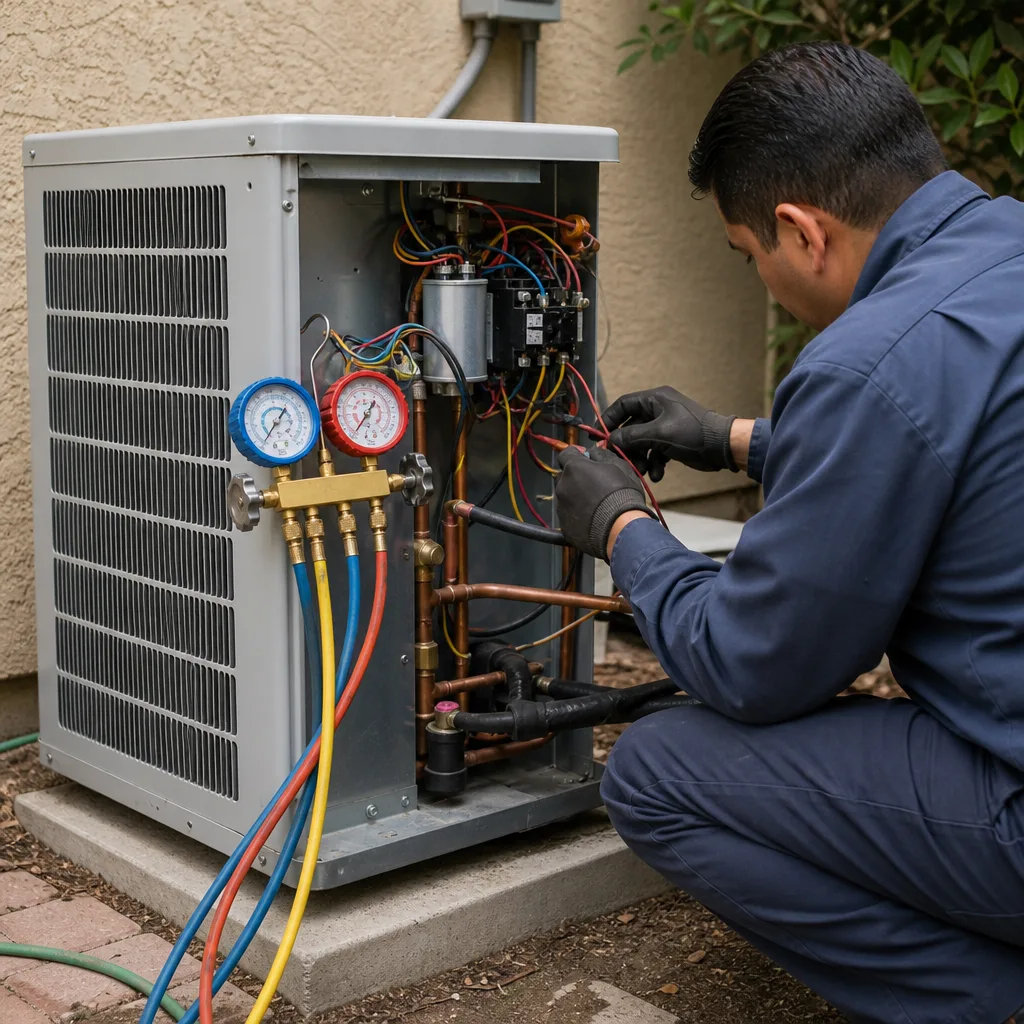
- Refrigerant charge verification. Title 24 requires that new AC installations verify the correct refrigerant charge (the amount of cooling fluid in the system) using manufacturer-specified procedures. An overcharged or undercharged system runs inefficiently, and the HERS rater or building inspector can require documentation showing the charge was set correctly.
- Whole-house fan and ventilation requirements. Certain Los Angeles homes undergoing major HVAC changes may be required to install whole-house ventilation to meet indoor air quality standards under Title 24. This is more common when the work involves adding insulation or sealing the building envelope.
The practical takeaway: in California, a permit is not just a piece of paper. It is a verification that the equipment and the installation meet the state’s energy code. A contractor who offers to skip the permit to save a few hundred dollars is also skipping the inspection that confirms the system is legal, efficient, and insurable. The Cold Harbour Heating and Air Los Angeles home team treats Title 24 compliance as part of the permit, not a separate upsell, because the two cannot be separated in California.
Who Should Pull the Permit: Contractor or Homeowner
In California, the person who pulls the permit is the person legally responsible for the work meeting code. That single sentence answers most of the liability question. Here is the breakdown.
When a licensed contractor pulls the permit, the contractor’s license number is attached to the job in the building department’s records. The contractor is the one the inspector calls. The contractor is the one who must correct any failed inspections. And most importantly, the contractor’s bond and liability insurance are tied to that permit. If the work fails and the contractor walks away, you have recourse through the Contractors State License Board (CSLB).
When a homeowner pulls the permit as an owner-builder, the homeowner assumes that legal responsibility. This is legal in California for work on your own primary residence, but it changes the risk picture significantly. If the inspector finds problems, you are the one who must fix them or hire someone to fix them. If the work later fails and causes property damage, your homeowner’s insurance may balk because the owner-builder permit makes you, not a licensed contractor, the responsible party. And if you sell the home, the disclosure requirements for owner-builder work are stricter in some Los Angeles jurisdictions than for contractor-permitted work.
There is one legitimate reason a homeowner might pull the permit: a homeowner who is genuinely doing the work themselves, under the owner-builder exemption, with the skills to do it right. For everyone else, the contractor should pull the permit. Any contractor who asks you to pull the permit on their behalf is asking you to carry liability that should be theirs. We pull every permit in our name when we do permitted work in Los Angeles. That is the whole point of hiring a licensed contractor.
The Inspection Sequence: Rough-In, Final, and What Inspectors Actually Check
For a new HVAC installation in Los Angeles County, the inspection process typically has two stages. Understanding what the inspector is looking for at each stage helps you know why the process takes the time it does and what can go wrong if corners were cut.
Stage 1: Rough-in inspection. This happens after the equipment is set and the ductwork, electrical wiring, and gas piping are run, but before everything is closed up. The inspector is checking:
- Electrical wiring gauge and circuit protection match the equipment’s nameplate requirements.
- Gas line sizing and connection methods meet the California Mechanical Code.
- Ductwork is properly supported, sealed, and insulated where required.
- Condensate drain lines have proper slope and termination points.
- Equipment clearances meet manufacturer specifications and fire code requirements.
- The unit is on a proper pad or platform, especially for rooftop or side-yard installations common in older Los Angeles neighborhoods.
Stage 2: Final inspection. This happens after the system is fully installed and operational. The inspector is checking:
- System operation. The furnace fires, the AC cools, the thermostat controls both correctly.
- Title 24 documentation. HERS duct leakage test results, refrigerant charge verification, and the appropriate compliance forms are on file.
- Safety controls. High-temperature limit switches, pressure switches, and carbon monoxide safety shutoffs are installed and functional.
- Penetration sealing. Wall, floor, and roof penetrations for line sets, flues, and electrical conduits are properly sealed against weather and fire.
- Final electrical connections. Disconnect switches are in place within sight of the equipment, and panel labeling is correct.
In our experience across Los Angeles, the most common final inspection failure is missing Title 24 paperwork. Not a bad install, not a code violation, just missing documentation. That is why the permit and the HERS compliance testing should be handled by the same contractor and scheduled as one package. It saves a failed inspection and a second visit.
How to Retroactively Permit Unpermitted Work
If you bought a home with unpermitted HVAC work, or if you had work done years ago and now realize it was never permitted, the situation is fixable. Los Angeles building departments process retroactive permits routinely, and the process is less painful than most people expect.
The steps for retroactive permitting:
- Verify what was done. Find the original invoice if you can, determine the scope of work, and identify whether the equipment itself is still in place and functional.
- Contact the local building department. In Los Angeles County, that could be the City of Los Angeles Department of Building and Safety (LADBS), or one of the smaller city building departments in Pasadena, Burbank, Glendale, Santa Monica, or Torrance, depending on where you live. Ask specifically about their process for “permit after the fact” or “unpermitted construction” for HVAC work.
- Expect an as-built inspection. The building department will send an inspector to assess the existing installation against current code. Work that was done 15 years ago may not meet today’s code, and you may be required to bring certain elements up to current standards.
- Prepare for correction costs. If the inspector flags problems, you will need to have them corrected by a licensed contractor before the permit can be finalized. Common retroactive corrections in Los Angeles include adding a proper disconnect switch, correcting duct support, replacing improper gas flex connectors, and adding required insulation.
- Pay the fees. Retroactive permits in Los Angeles typically cost the standard permit fee plus a penalty, which varies by jurisdiction. In the City of Los Angeles, the penalty for unpermitted work is often calculated as a multiple of the original permit fee, and the total retroactive permit cost for HVAC work commonly runs between $400 and $1,200 depending on the city and the scope. Smaller cities within LA County often have lower fees.
- Close the permit. Once corrections are done and the final inspection passes, the permit is closed, and the work is on the record as legal. Keep that documentation. You will need it at resale.
There is a real question of whether to leave unpermitted work undisclosed and hope for the best. The answer in Southern California’s real estate market is that this is a bad bet. Standard disclosure forms ask directly about unpermitted work and open permits. Lying on a disclosure is fraud, and the statute of limitations on real estate disclosure fraud in California is long. The cost of retroactive permitting is almost always less than the cost of a failed escrow or a post-sale lawsuit.
The Real Cost of Skipping a Permit in Los Angeles
The permit fee for a typical HVAC installation in Los Angeles County runs somewhere in the $150 to $600 range depending on the city and the scope. That is the entire cost of doing it right. Here is what skipping the permit can actually cost.
The unpermitted work is discovered during a home inspection, the sale stalls, and the buyer demands a retroactive permit plus a price reduction for the delay. The seller pays for the permit, the corrections, and the lost negotiating position. Total cost: often $3,000 to $10,000 when you factor in the concessions.
A homeowner’s insurance claim is denied because the damage was traced to unpermitted mechanical work. Some carriers are adding specific exclusions for unpermitted modifications in California, and a furnace fire or refrigerant leak traced to unpermitted work is exactly the kind of claim these exclusions are designed to deny.
The unpermitted work fails in a dangerous way. A gas furnace installed without a permit and without an inspection has no third-party verification that the gas connections are tight, the flue vents properly, and the safety controls work. That is not a paperwork problem; that is a carbon monoxide problem. The permit inspection is the second set of eyes on work that can kill people if done wrong.
None of this is abstract. In our experience across Los Angeles, we have been called to homes where a handyman or an unlicensed side-job contractor installed a furnace without a permit, and the homeowner did not find out until the system failed or the house went up for sale. The repair or replacement cost far more than the permit would have. The Furnace Repair in Los Angeles team regularly sees the aftermath of unpermitted work, and the pattern is consistent: the savings from skipping the permit evaporate the first time something goes wrong.
Common Mistakes to Avoid
- Believing a like-for-like swap never needs a permit. In many Los Angeles County cities, replacing a furnace or AC unit with the same type in the same location still requires a mechanical permit because the gas and electrical connections are disconnected and reconnected. Check with your city, do not assume.
- Treating a mini-split as a no-permit appliance. Mini-splits are among the most common unpermitted HVAC installations in Los Angeles because homeowners and some contractors assume a wall-mounted unit is simple. The electrical circuit and refrigerant line set make it a permit job.
- Letting the contractor pull the permit in your name. This shifts liability from the contractor to you. A licensed contractor should always pull the permit under their own license.
- Ignoring Title 24 requirements. A unit that meets efficiency minimums on paper can still fail inspection if the HERS duct test, refrigerant charge verification, or compliance forms are missing. The paperwork is part of the permit.
- Failing to close the permit. An open permit on a Los Angeles property is a red flag during escrow. If the final inspection was never scheduled or the permit was never signed off, the work is effectively still unpermitted for disclosure purposes.
- Buying a home without checking permit history. Los Angeles building department records are public. A quick check of the permit history for the property address before closing can reveal unpermitted HVAC work before it becomes your problem.
- Using an unlicensed contractor because the price was lower. In California, unlicensed contractors cannot legally pull permits. If the person doing the work cannot pull a permit, you are getting unpermitted work by definition.
See the difference
 Before
 After
After Before
 After
After Before
 After
AfterWhen to Call a Professional
Any HVAC job that requires a permit is, by definition, a job for a licensed contractor. If you are installing a new system, replacing an existing one, adding ductwork, or putting in a mini-split, the permit process and the installation need to be handled by someone who does this work every day. The same applies if you have discovered unpermitted work and need to bring it into compliance; our AC Repair Maintenance Checklist for Los Angeles Homeowners covers what to check. A licensed contractor can assess the installation, identify what needs correcting, and manage the retroactive permit process with the local building department. Cold Harbour Heating and Air Los Angeles offers free estimates in Los Angeles for permitted HVAC work and retroactive permit corrections. Call (213) 531-5904 and we will walk you through exactly what your project needs.
Frequently Asked Questions
In most Los Angeles County cities, yes. Replacement-in-kind AC swaps still require a mechanical permit because the electrical and refrigerant connections are disconnected and reconnected, and the new unit must meet current Title 24 efficiency standards. Some cities allow an over-the-counter permit for simple like-for-like swaps, but a permit is still required. Call (213) 531-5904 if you want us to check the specific requirements for your address.
You have a legal duty to disclose the unpermitted work on the standard California transfer disclosure forms, and failing to disclose it is fraud. Even if you disclose it, buyers in Los Angeles routinely demand the work be retroactively permitted or replaced before closing. The retroactive permit and corrections almost always cost more than the original permit would have.
Yes. California insurance carriers are increasingly adding exclusions for damage caused by unpermitted mechanical work. A fire or water damage claim traced to an unpermitted furnace or AC installation can be denied, leaving you with the full repair cost. The permit is documentation that your system was installed to code, and that documentation is part of what your insurance policy assumes you have.
For a standard replacement or new installation, the permit is usually issued within one to five business days after the contractor submits the application and plans. The inspection schedule depends on the city, but most Los Angeles County building departments can schedule rough-in and final inspections within a week or two of the request. The AC Installation in Los Angeles team handles the permit application, scheduling, and inspections as part of the installation.
HVAC permit fees in Los Angeles County typically run between $150 and $600 depending on the city and the scope of work. Retroactive permits for previously unpermitted work cost more, often $400 to $1,200, because of added penalty fees. The exact fee depends on your city’s building department, and a licensed contractor can confirm the number before the work starts.
Yes. Mini-split installations require a dedicated electrical circuit, refrigerant line set, and wall penetration, all of which are permit-triggering work in Los Angeles County. Treat a mini-split like any other HVAC installation: pull the permit, schedule the inspection, and keep the documentation. Skipping the permit on a mini-split creates the same disclosure and insurance problems as unpermitted central air conditioning.
The Bottom Line
HVAC permits in California are not bureaucratic busywork. They are the written proof that your heating and cooling system was installed to code, meets energy efficiency standards, and is safe to operate. In Los Angeles, where unpermitted work is a known source of escrow failures and insurance denials, the permit is financial protection as much as legal compliance. A licensed contractor who pulls the permit, schedules the inspections, and closes everything out is the difference between a system you can prove is legal and a system you have to explain later. If you are planning HVAC work of any kind in Los Angeles, or if you have unpermitted work you need to bring into compliance, explore more guides & resources or call (213) 531-5904. The estimate is free, the permit is handled, and the guarantee is in writing.
Written by Victor Mancini, Owner at Cold Harbour Heating and Air Los Angeles, serving Los Angeles since 2003.